TWIN SONNET:
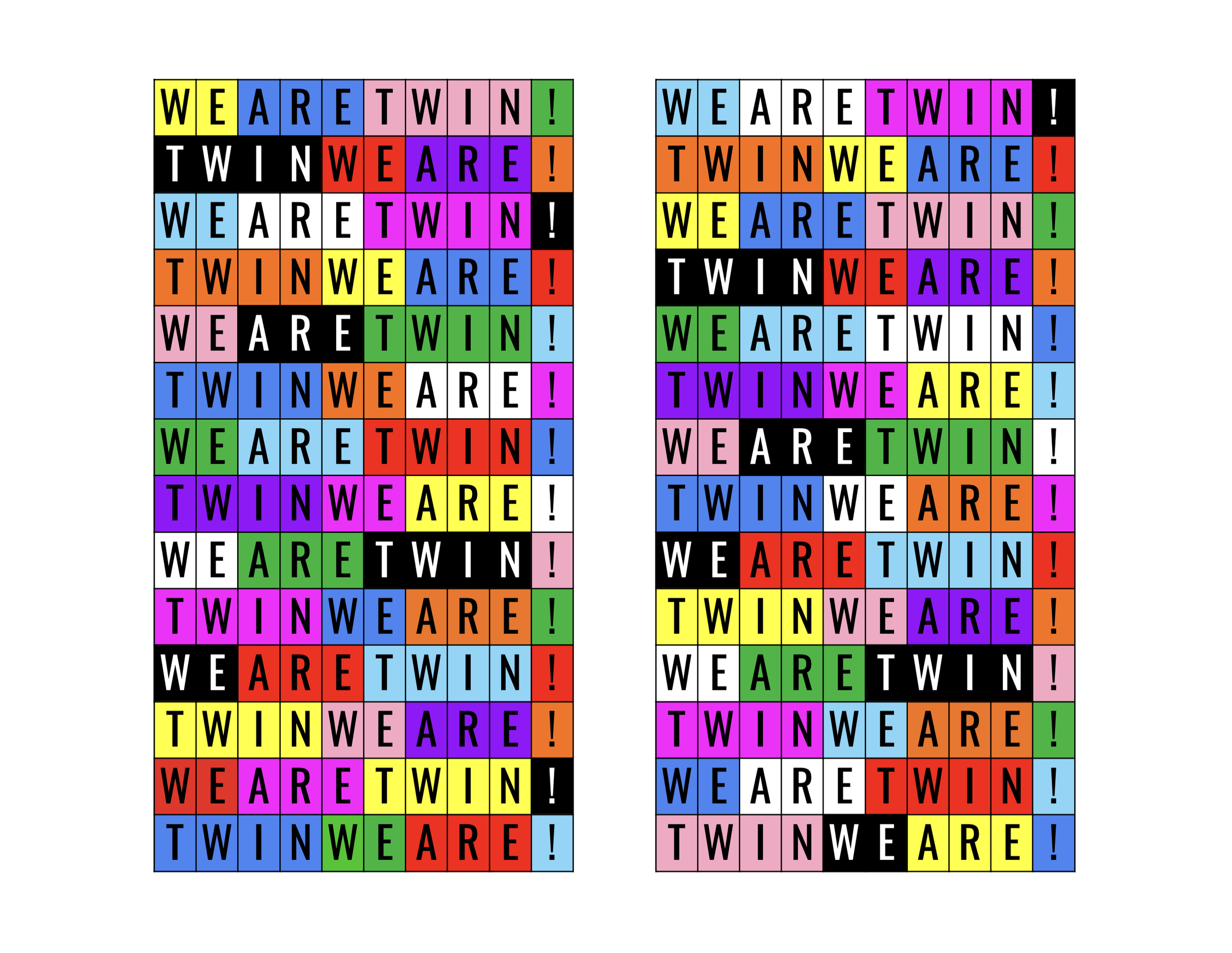
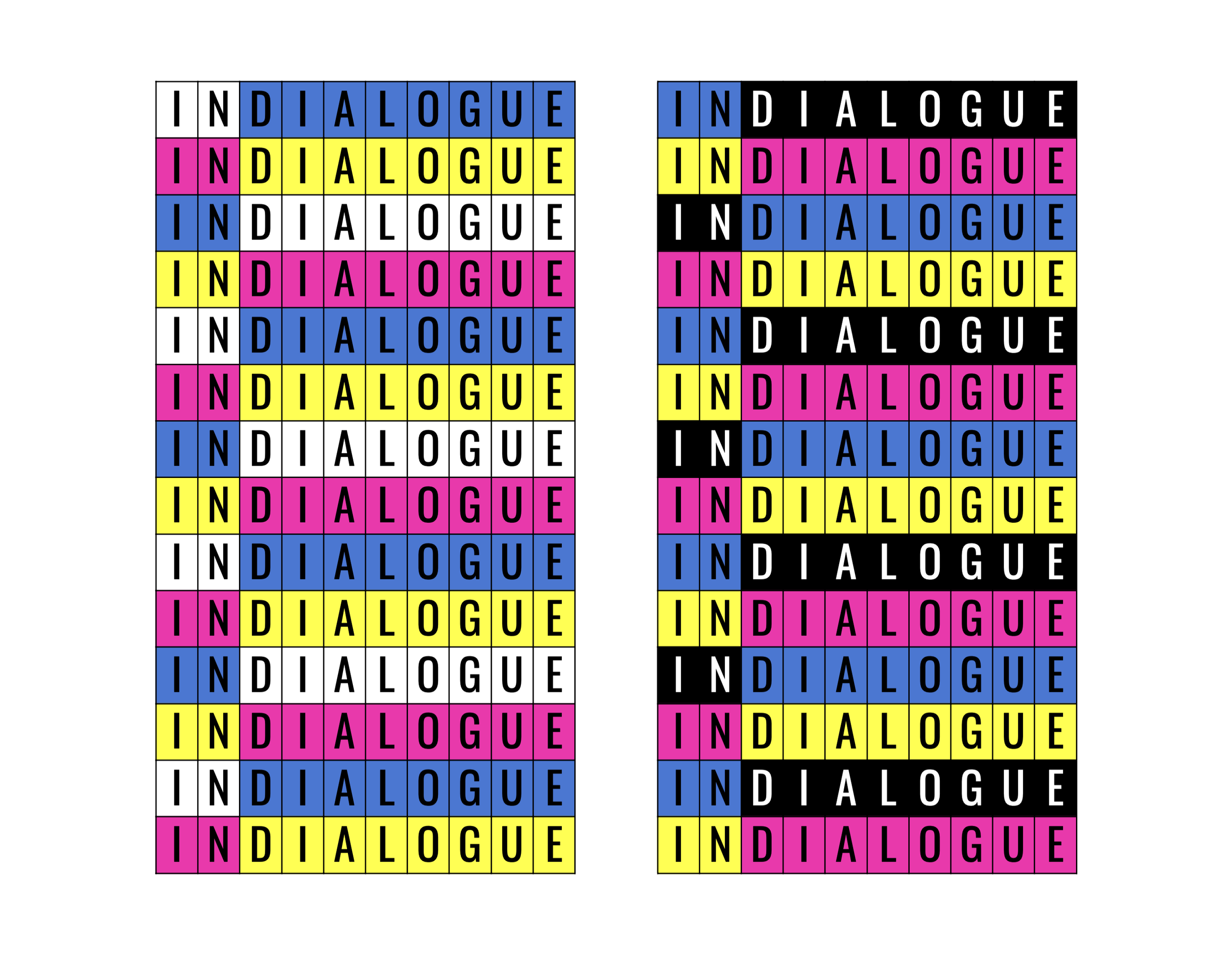
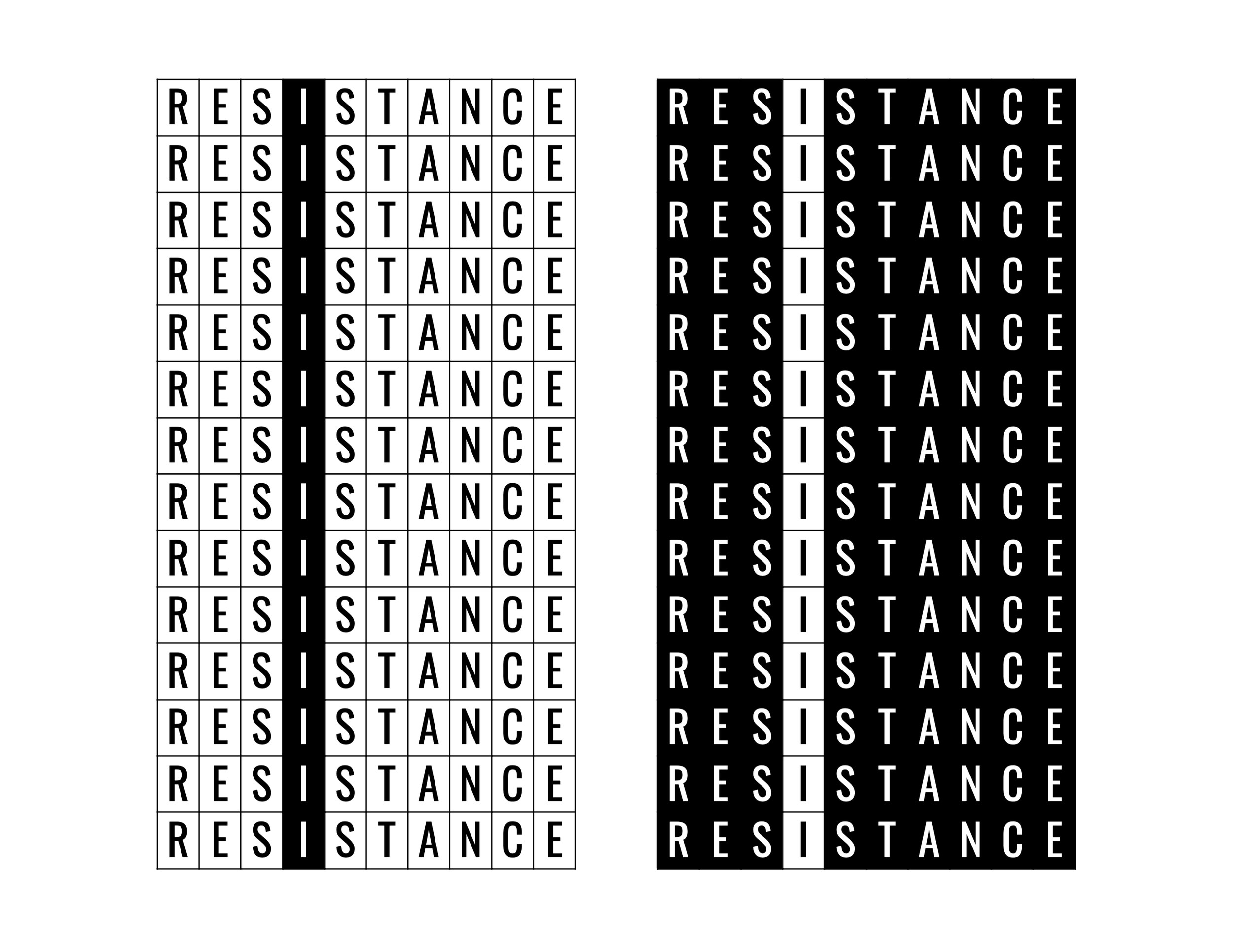
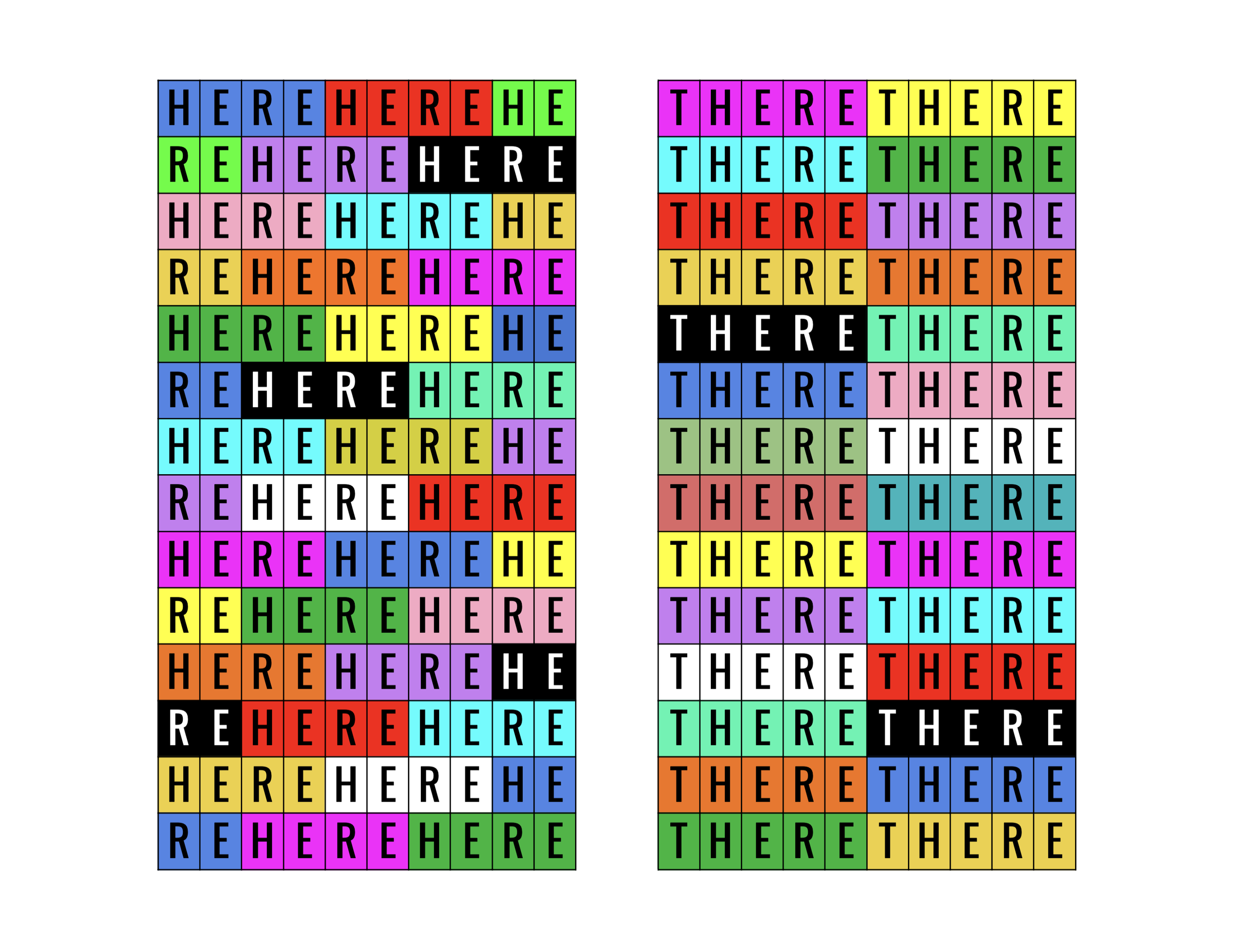
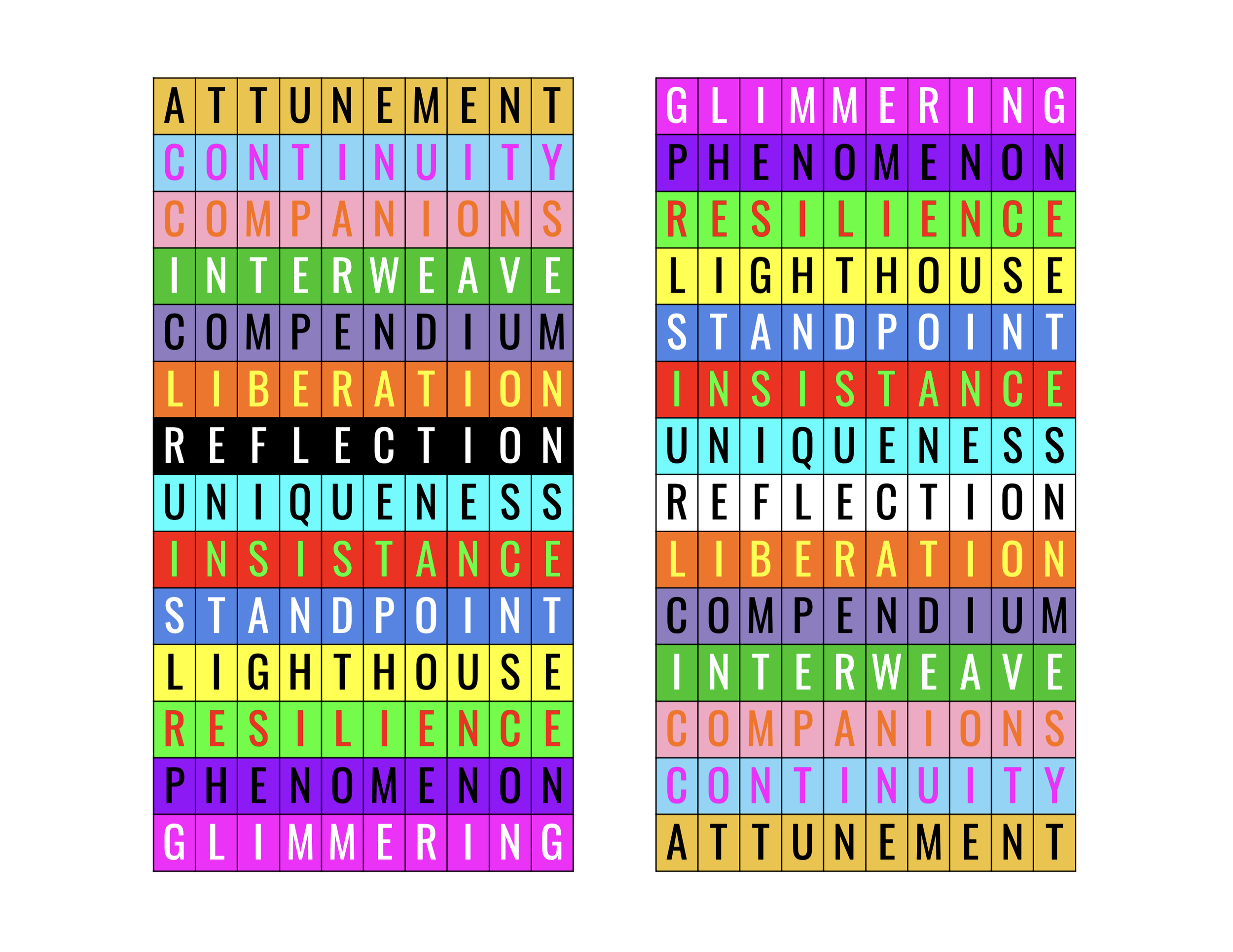
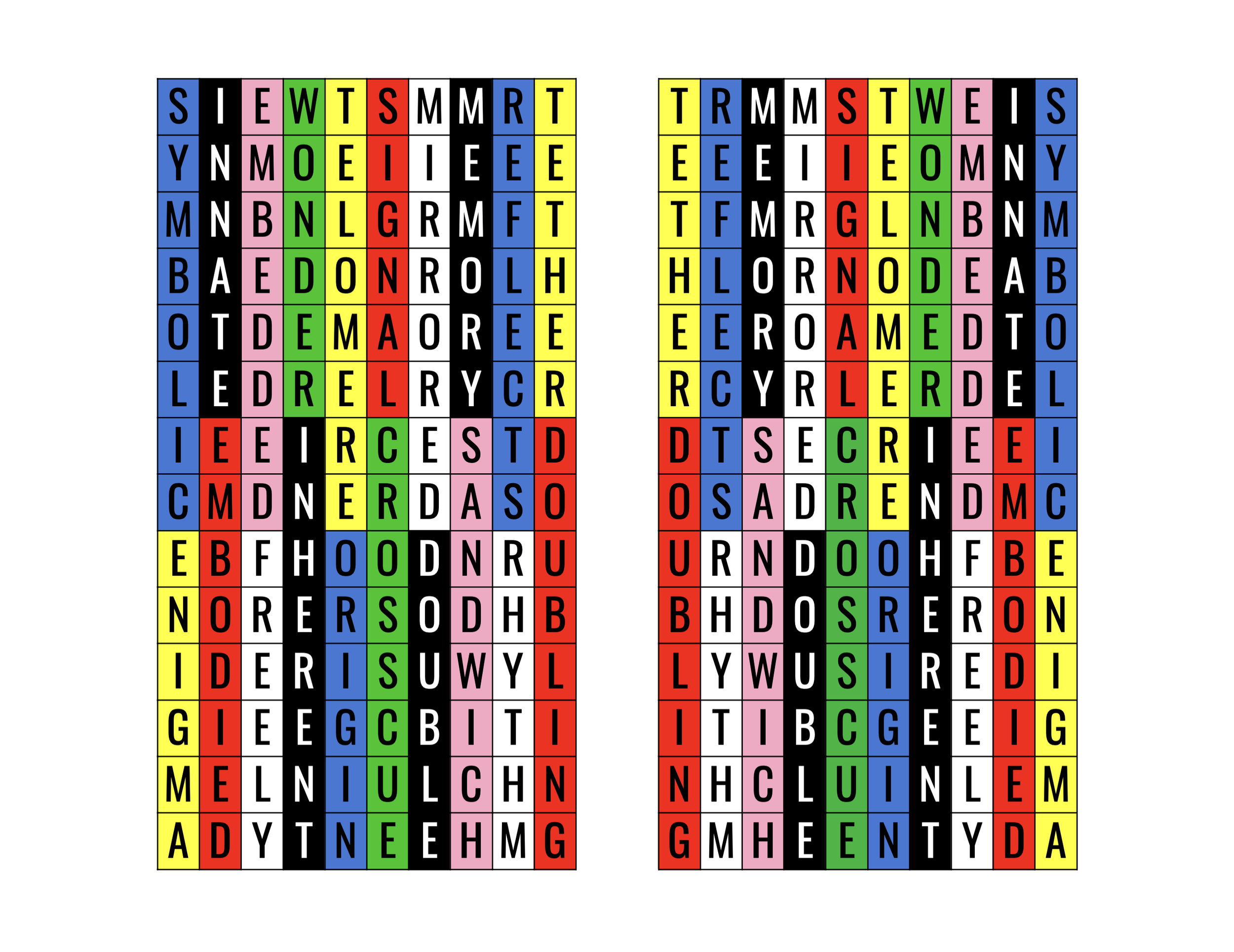
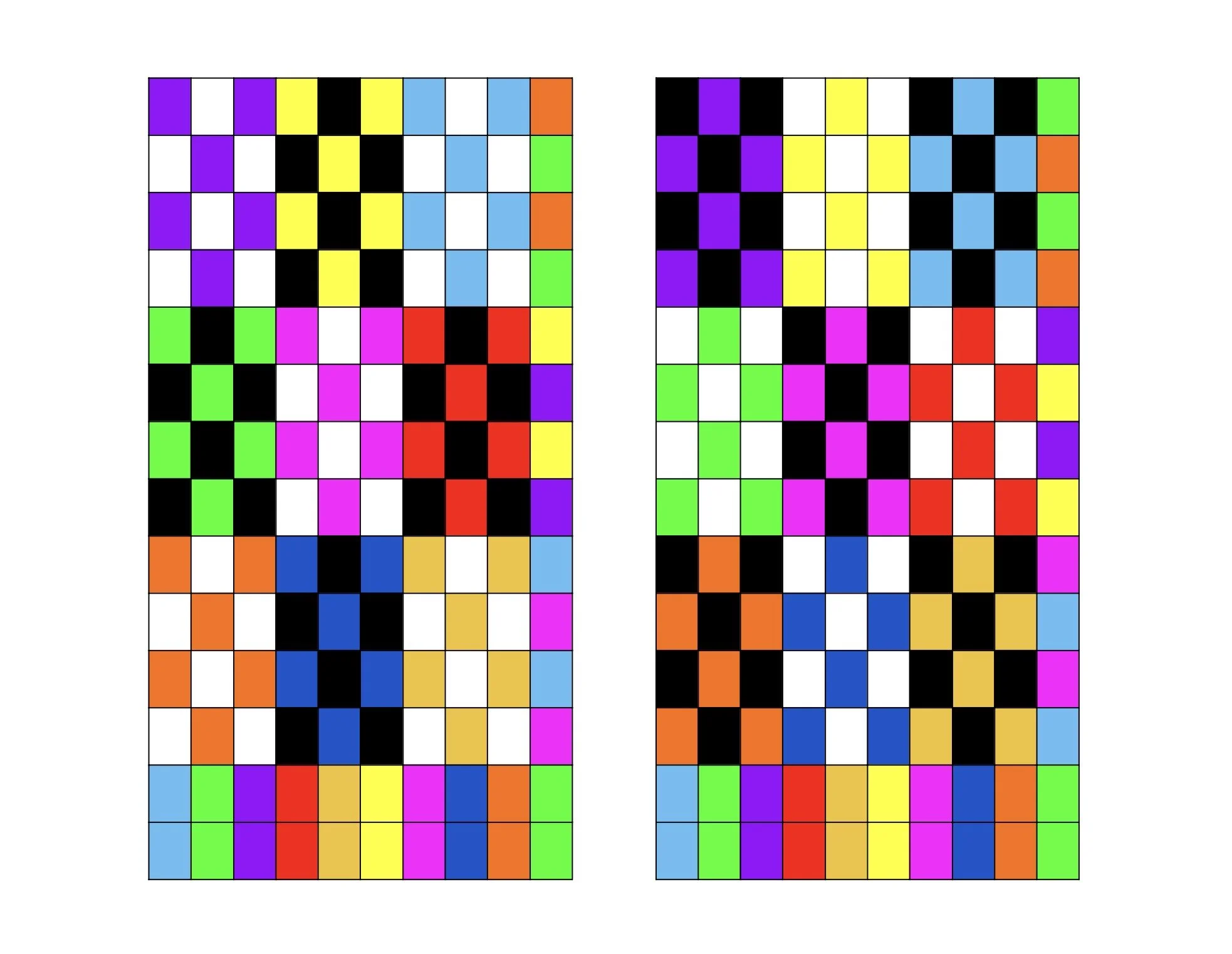
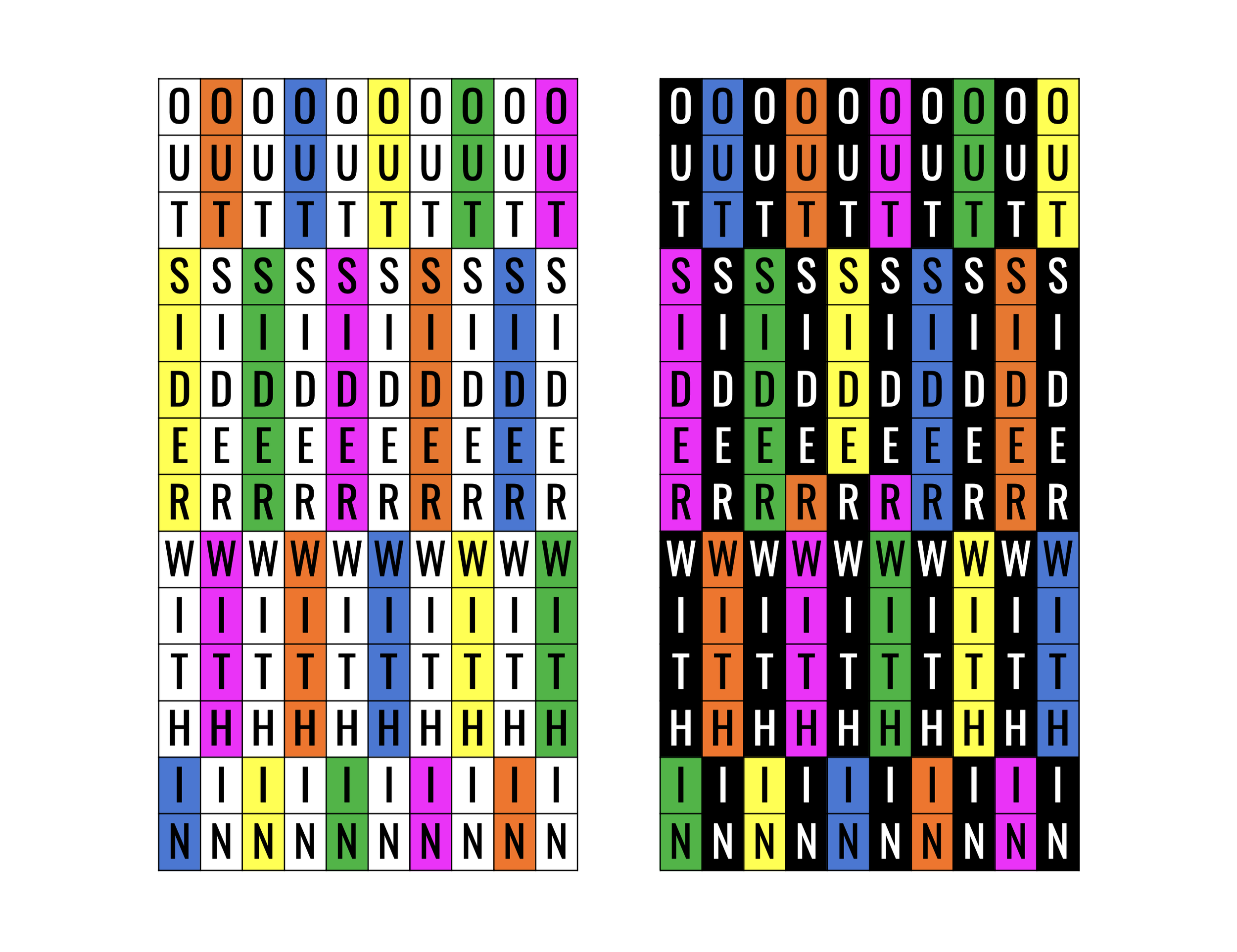
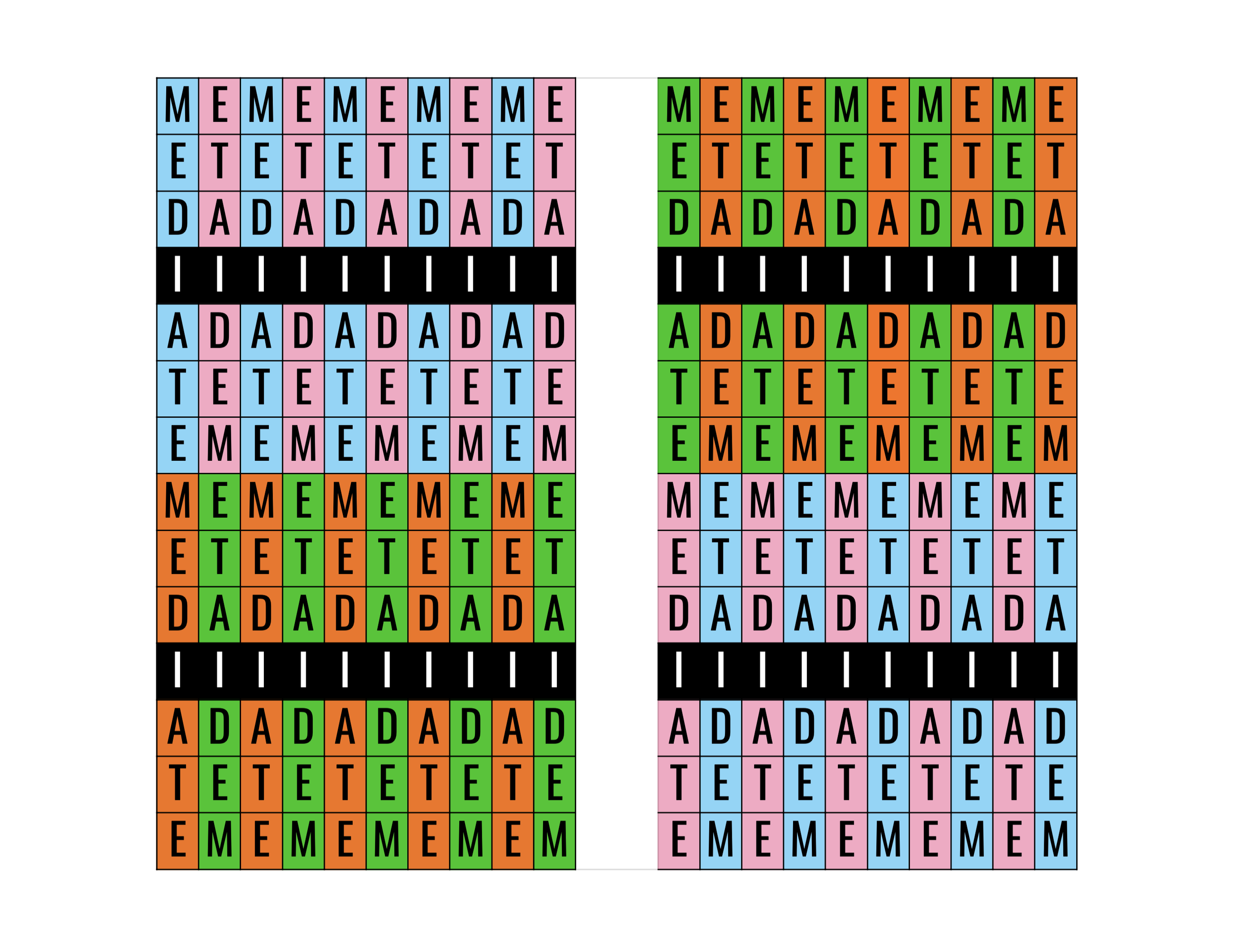
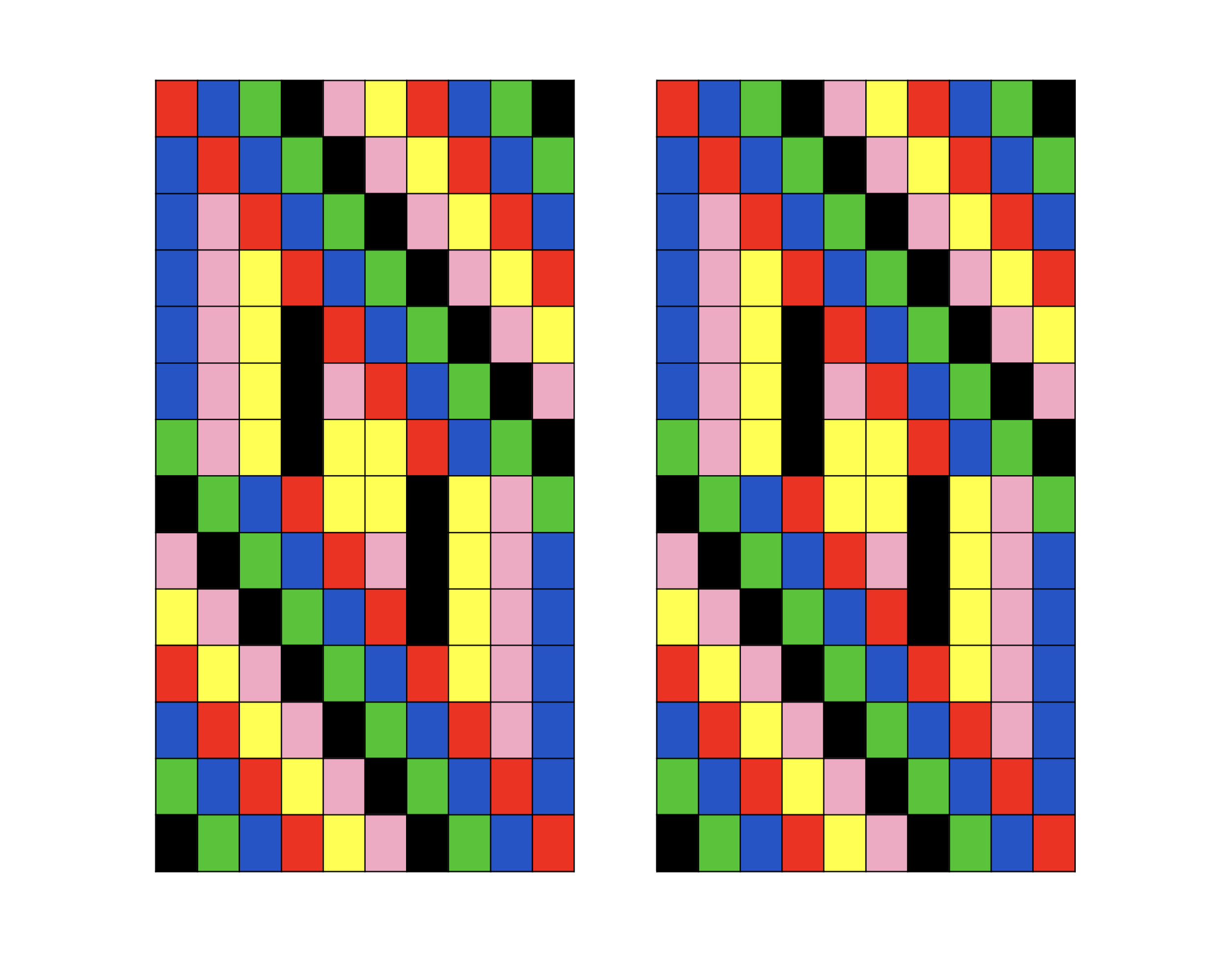
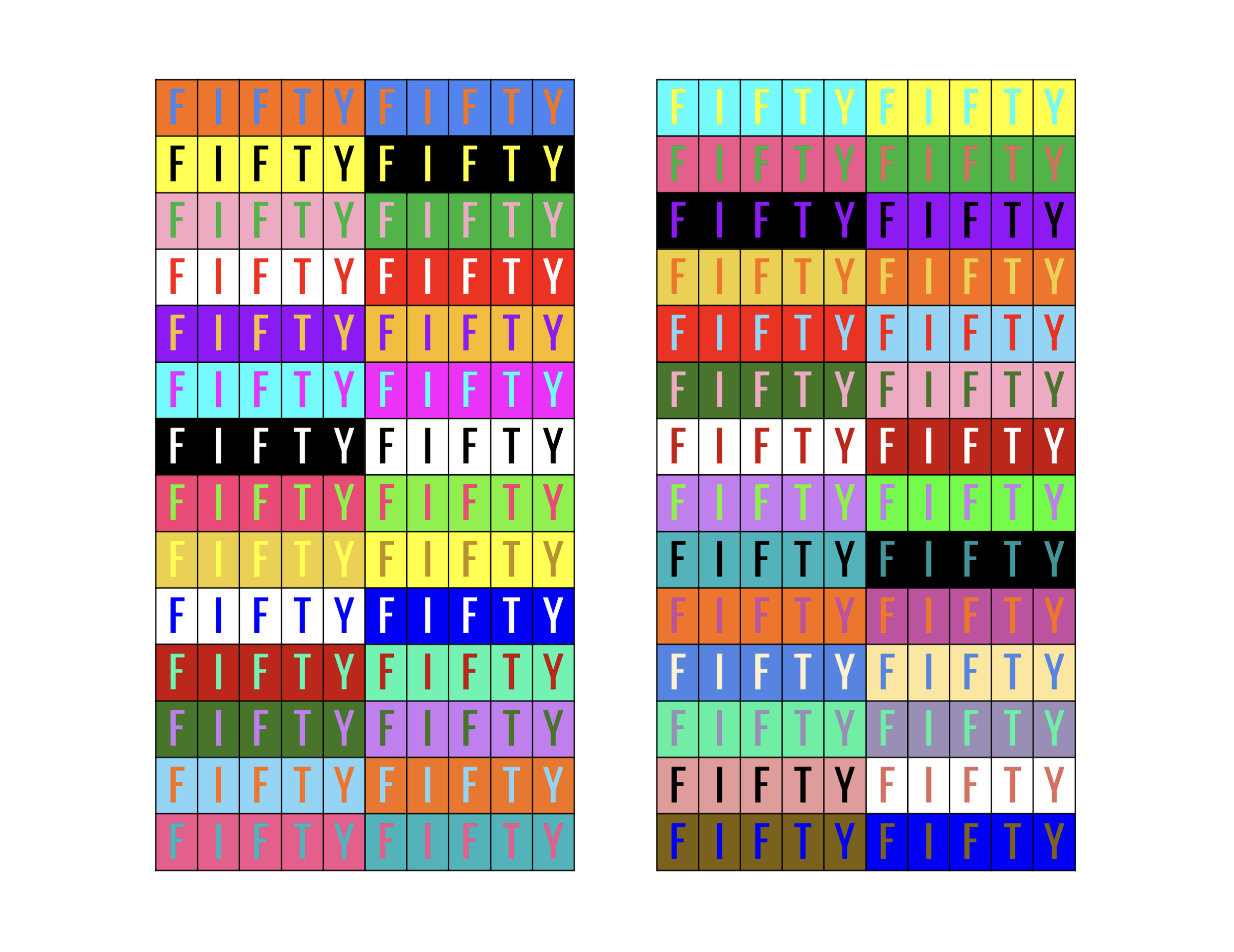
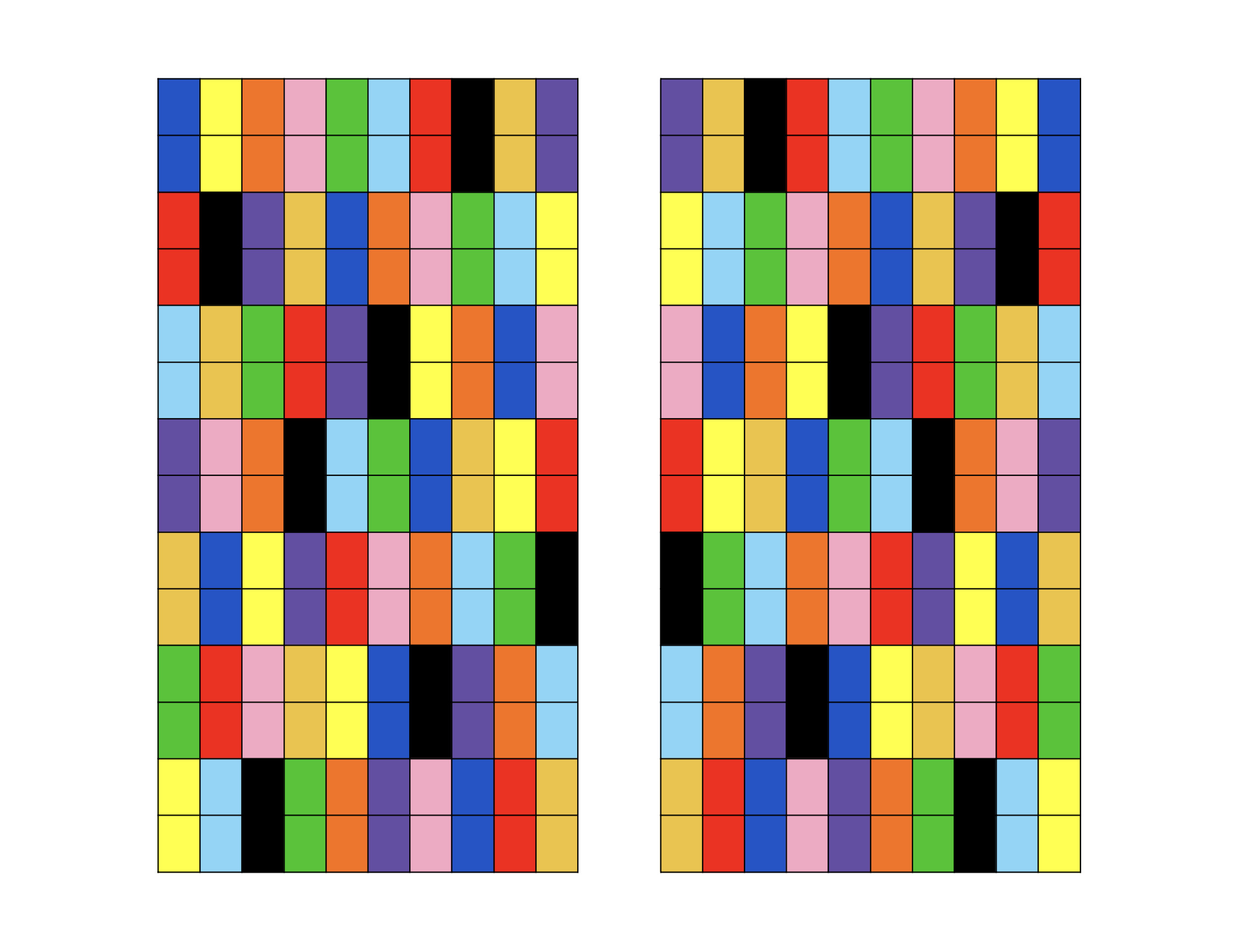
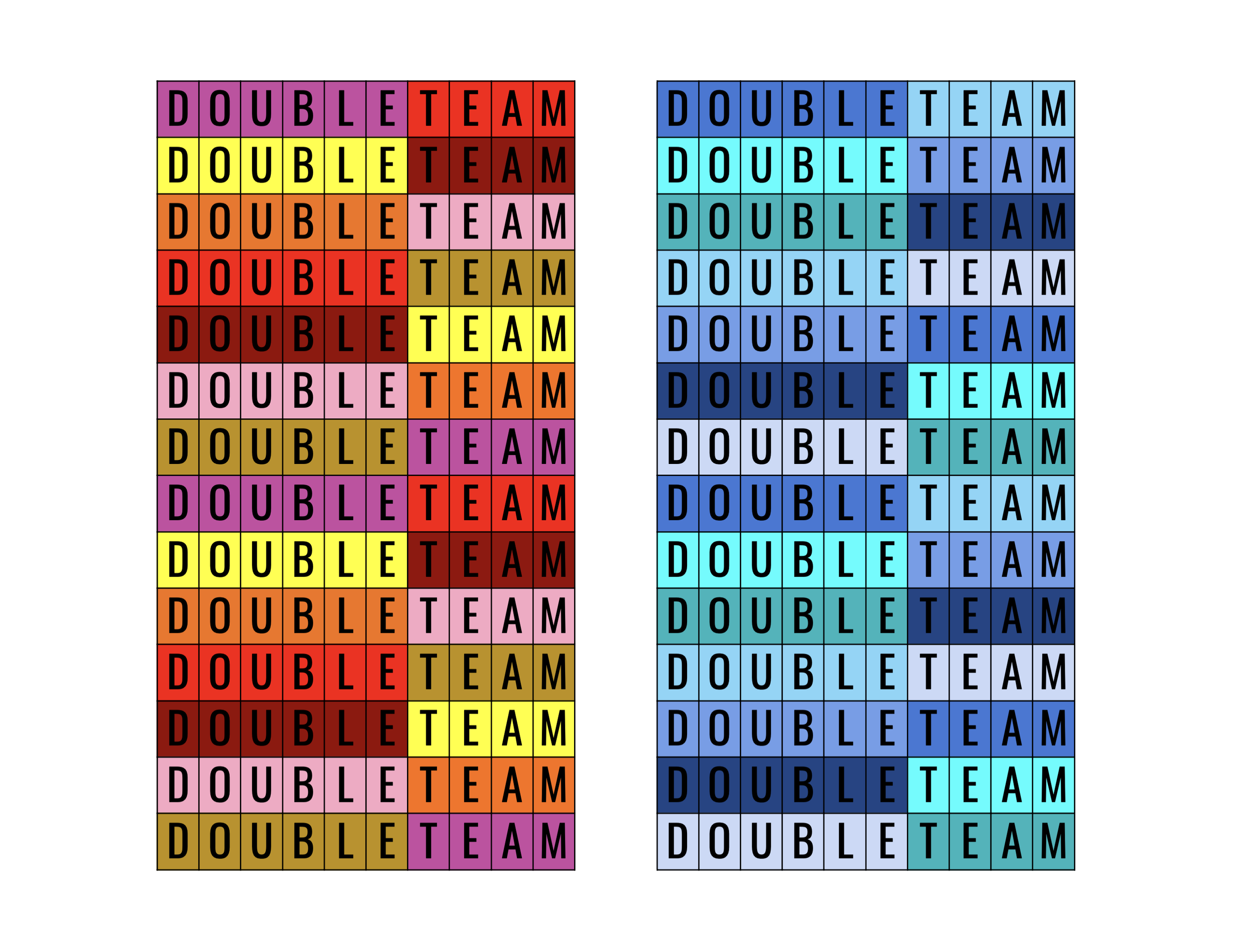
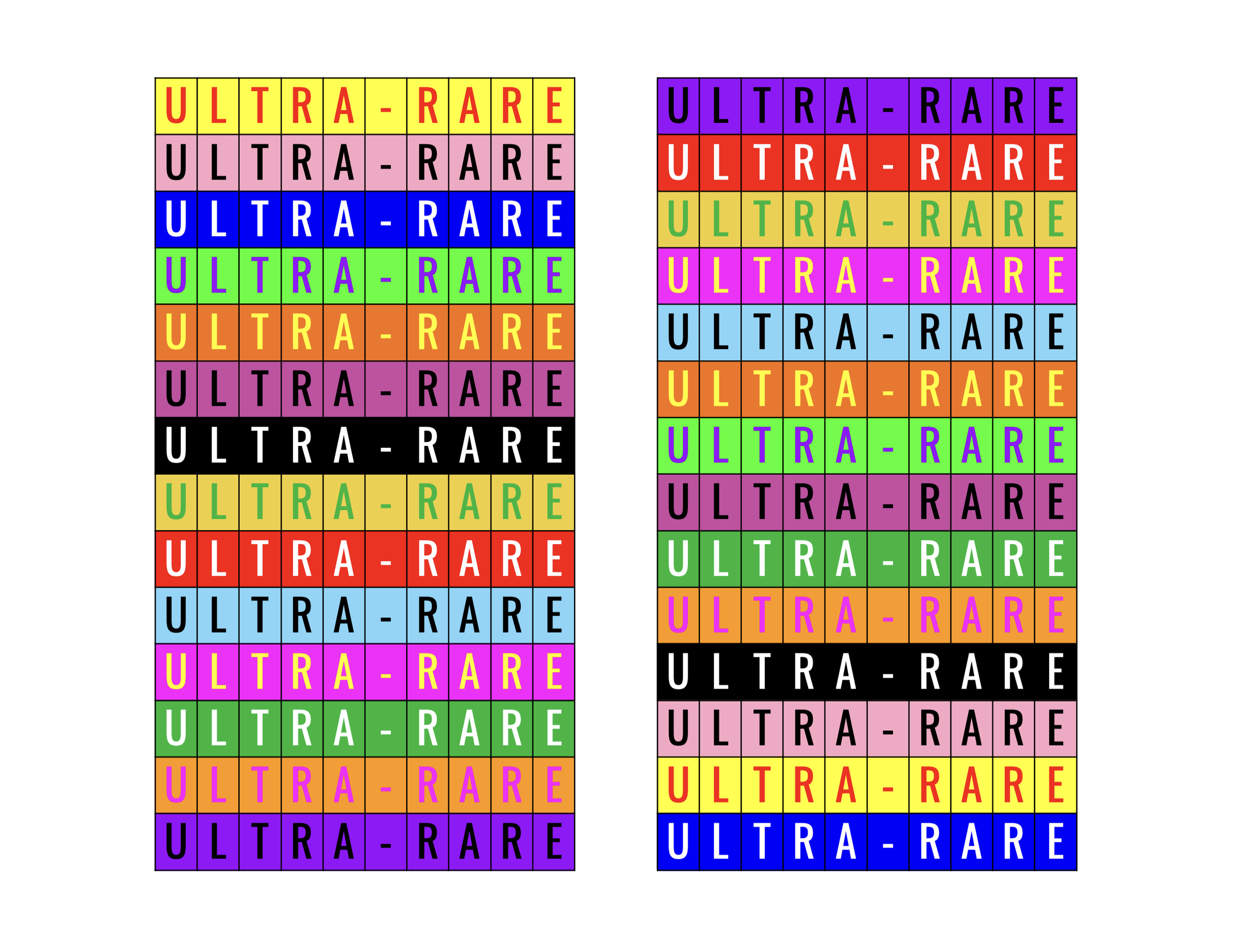
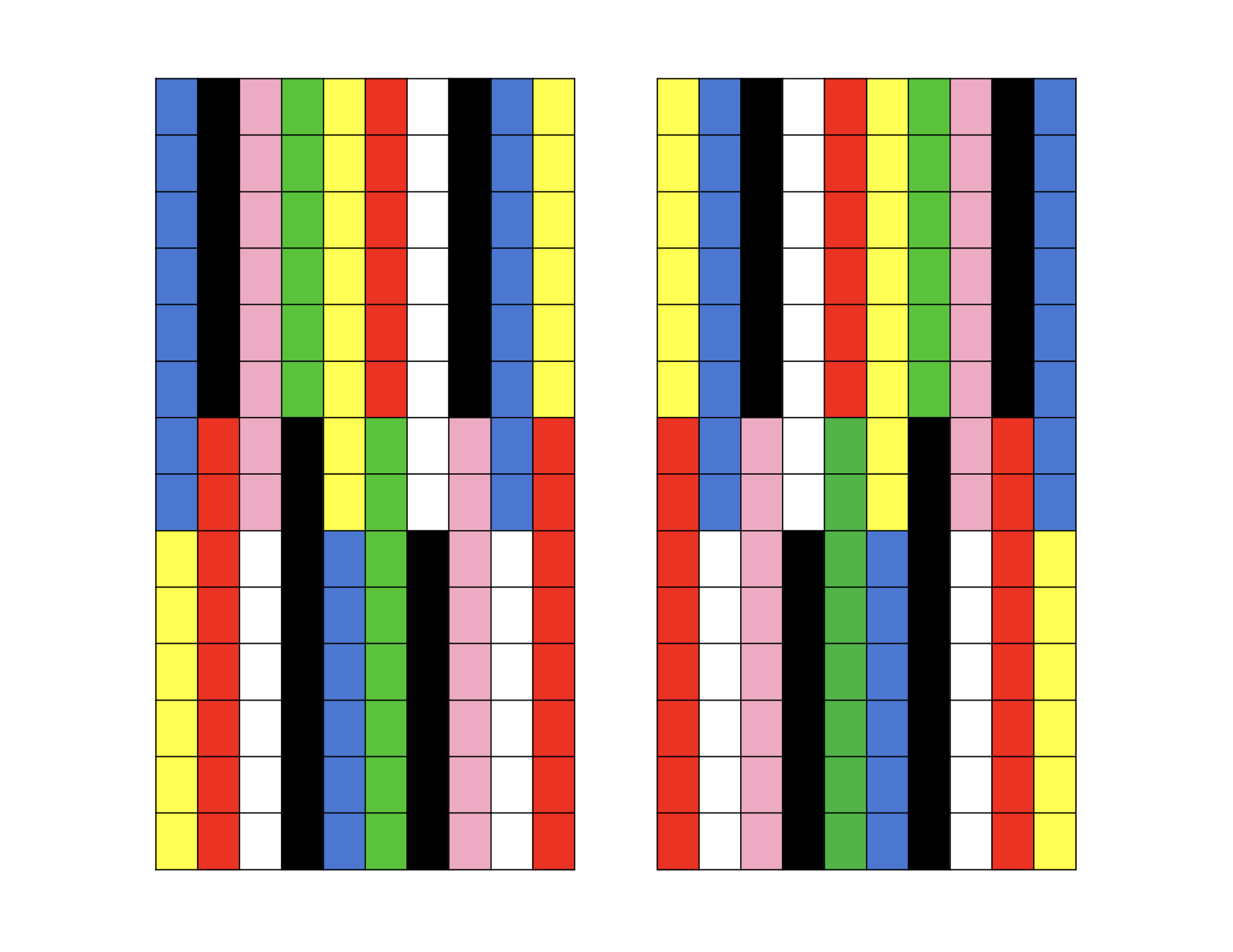
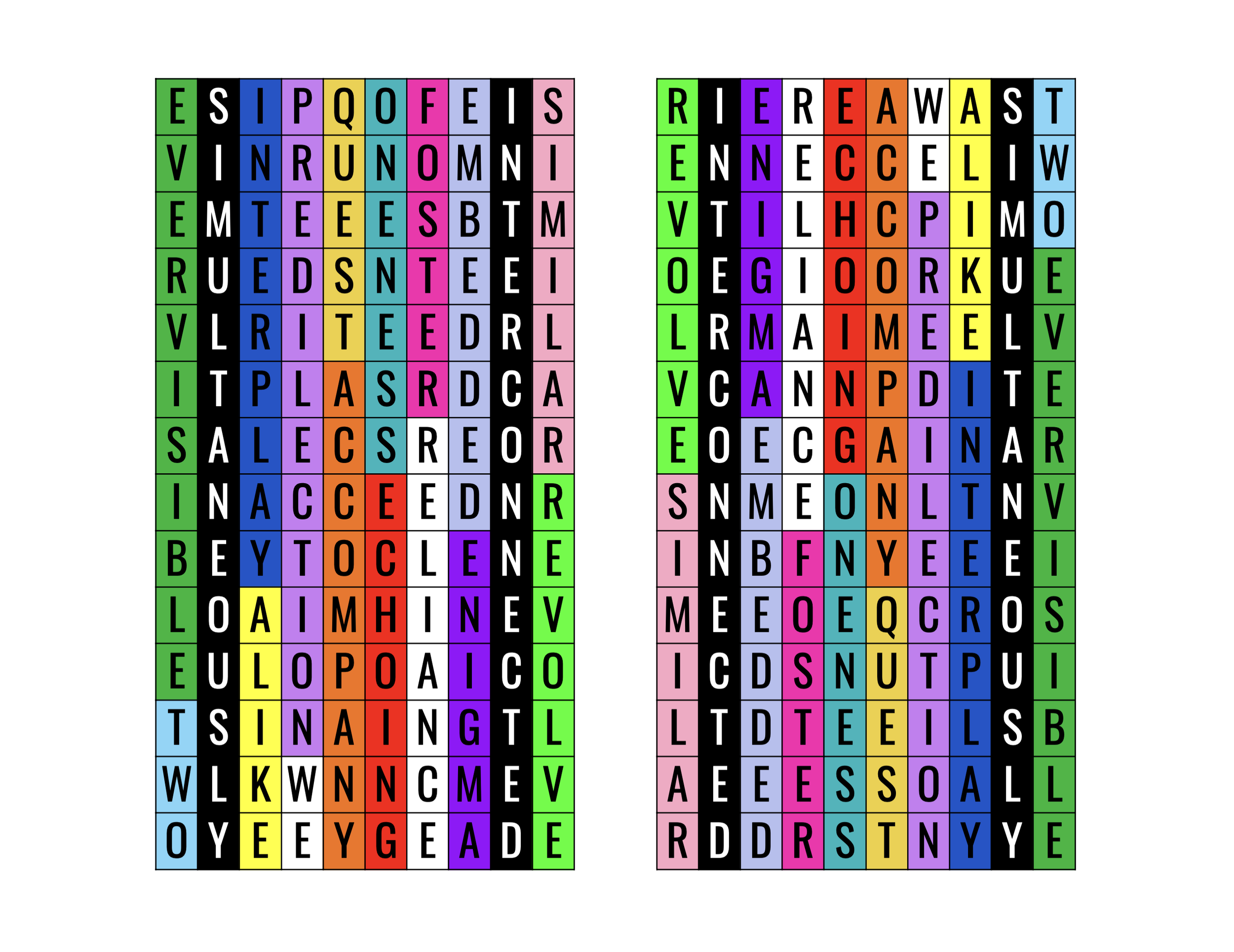
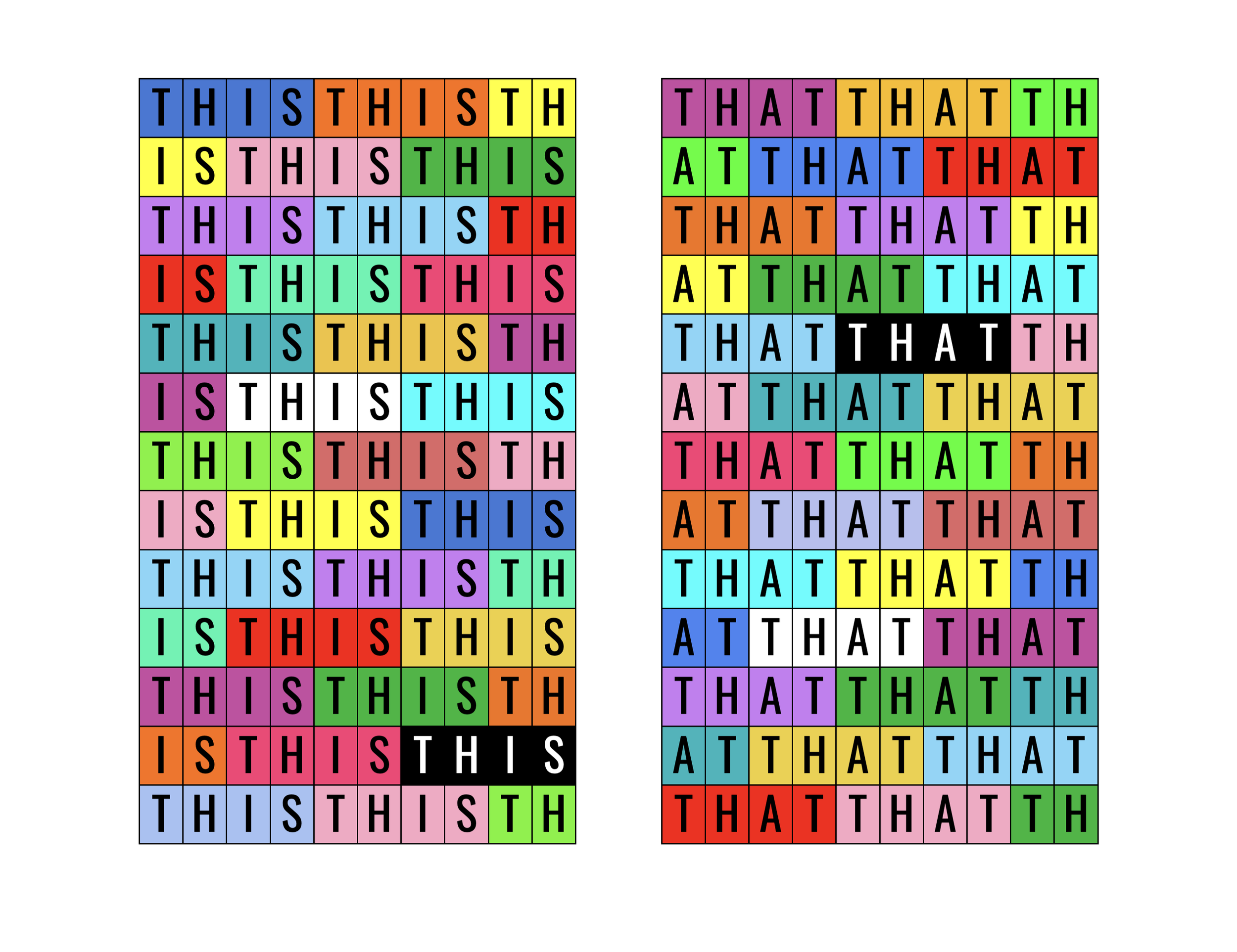
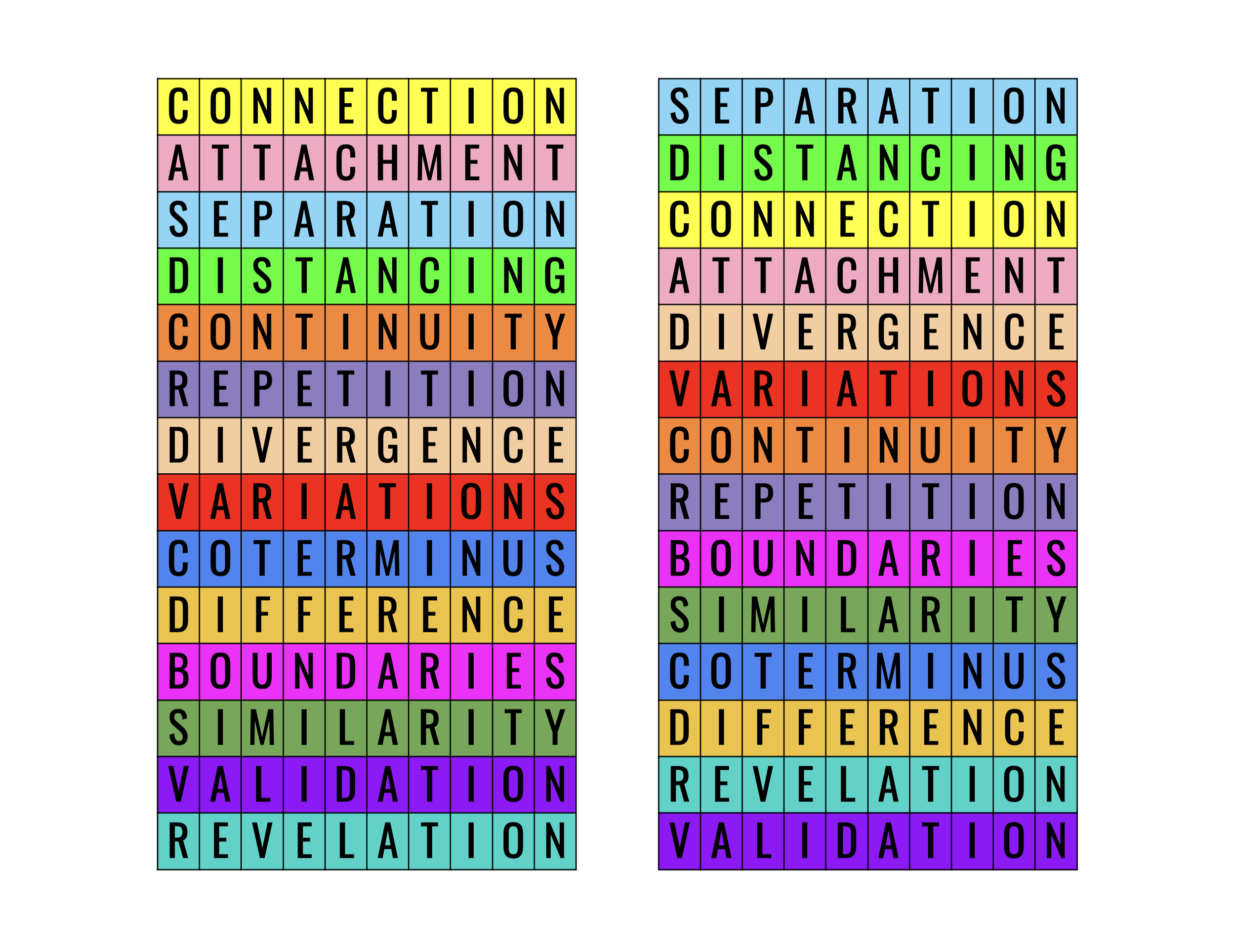
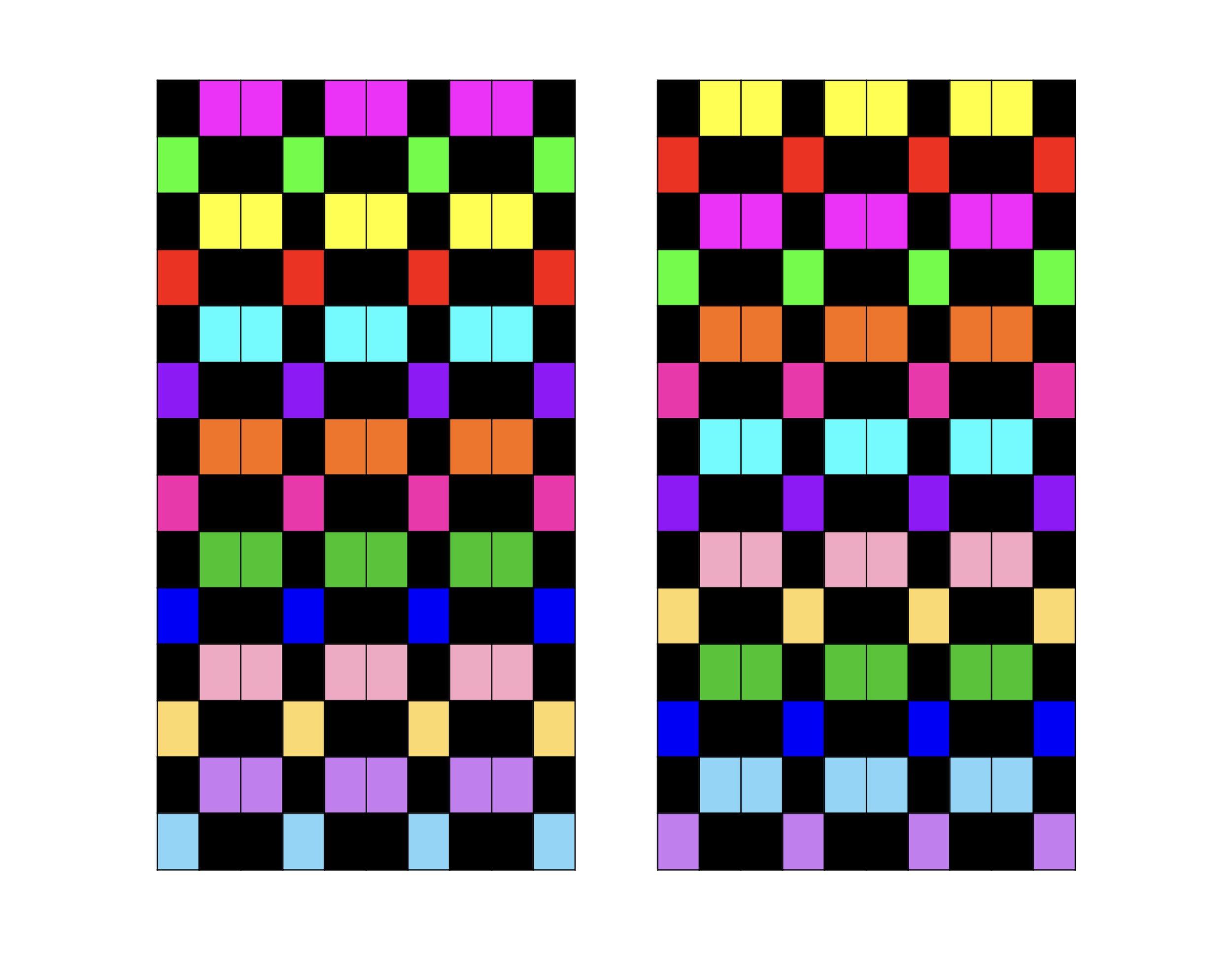
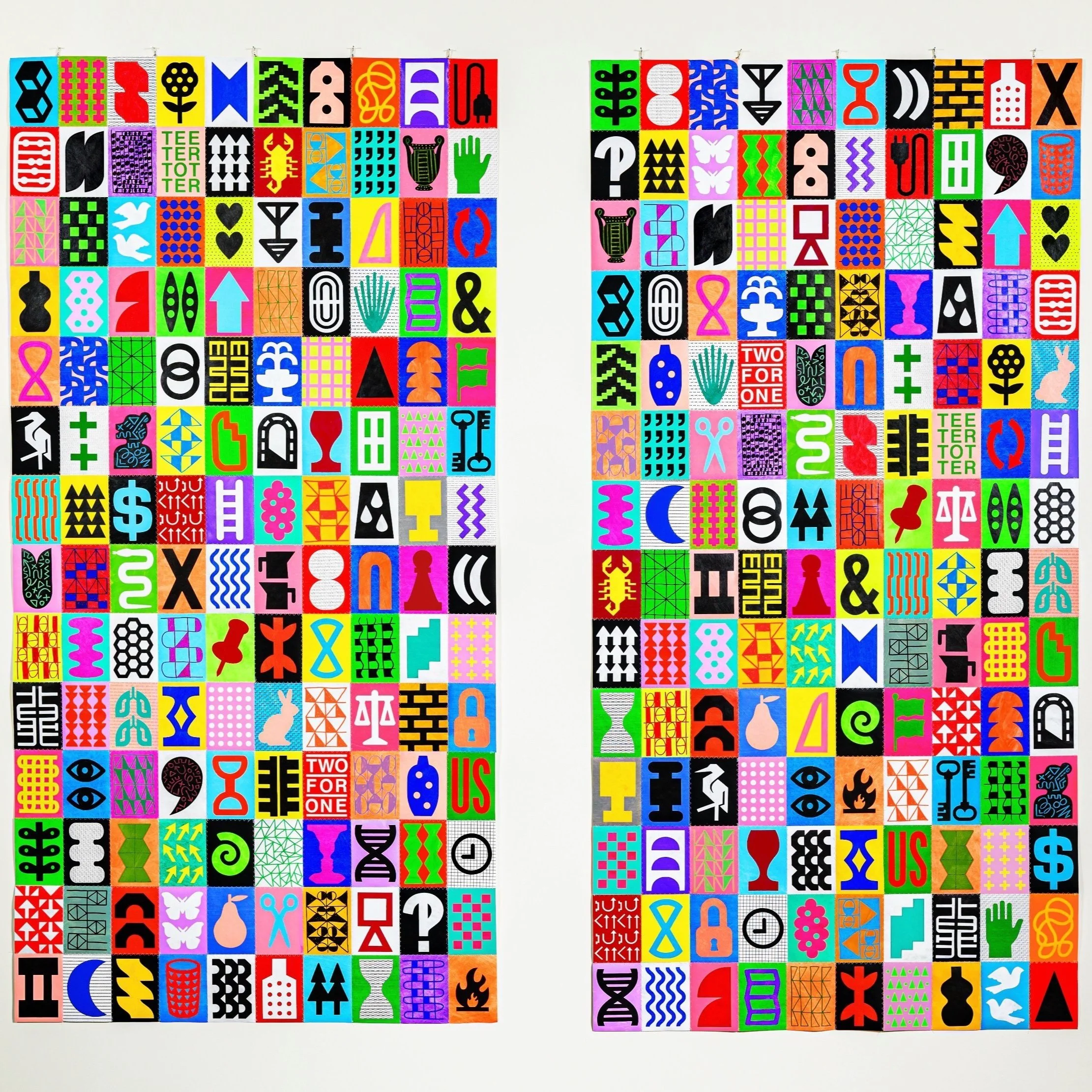
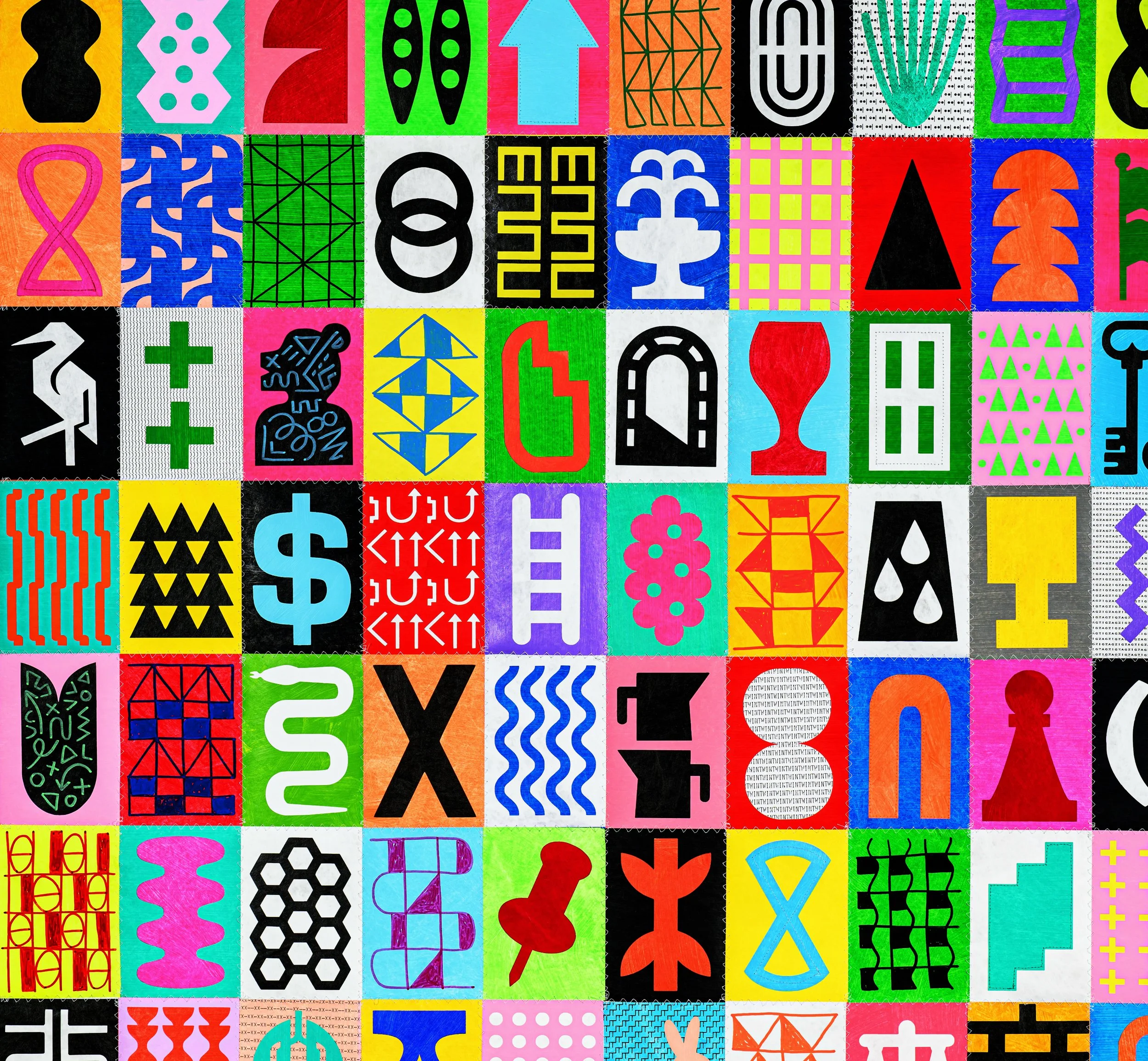
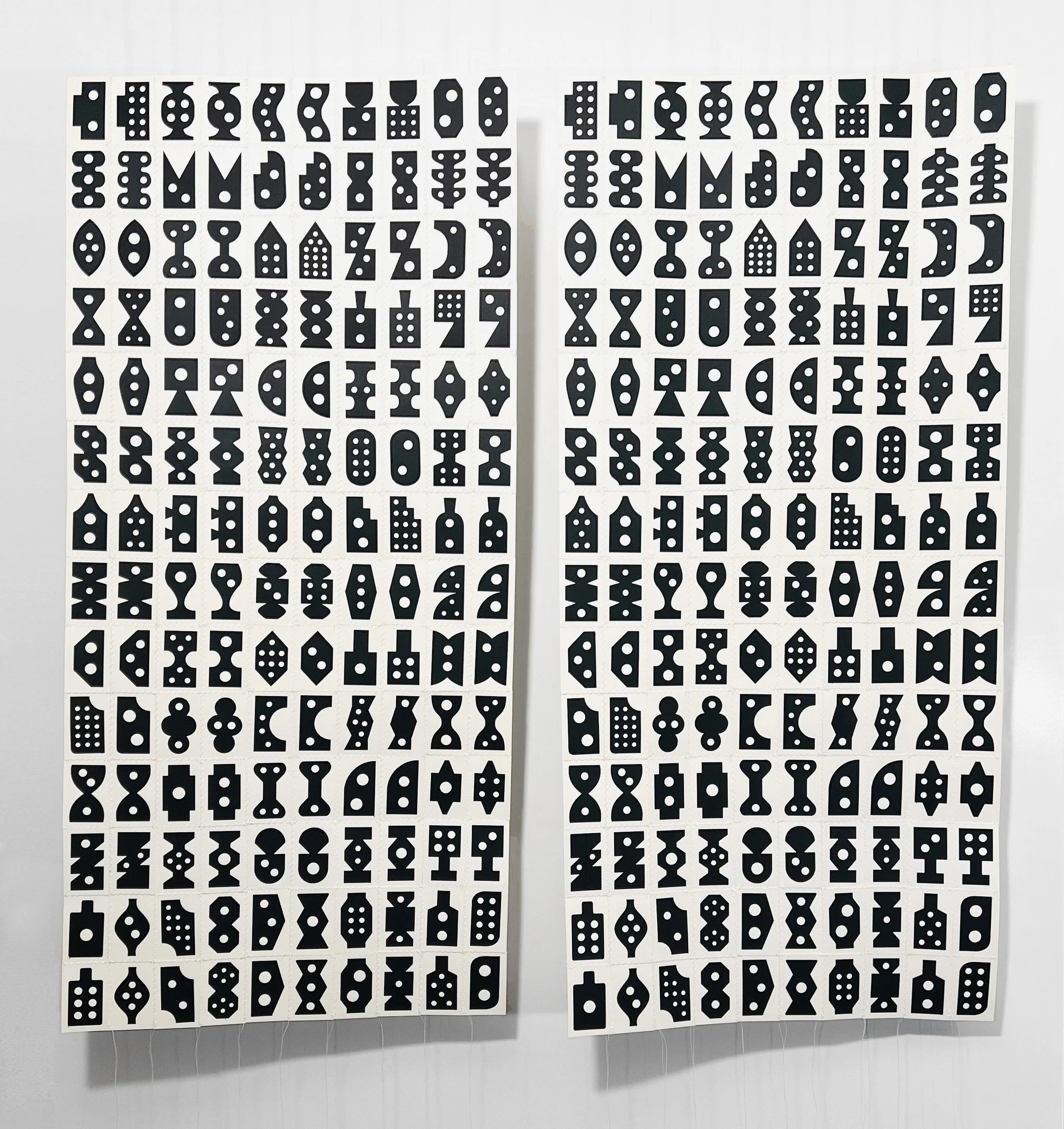
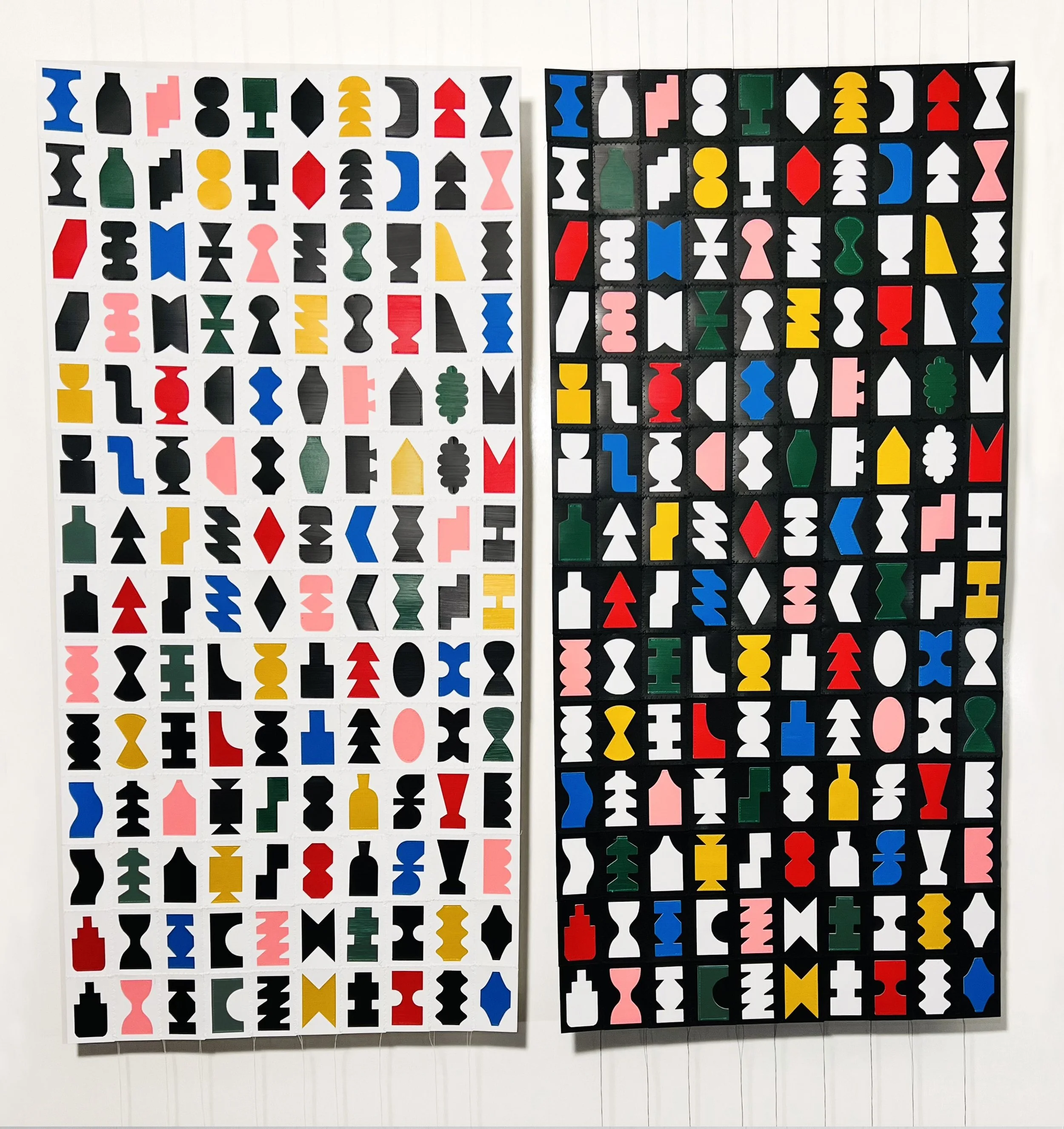
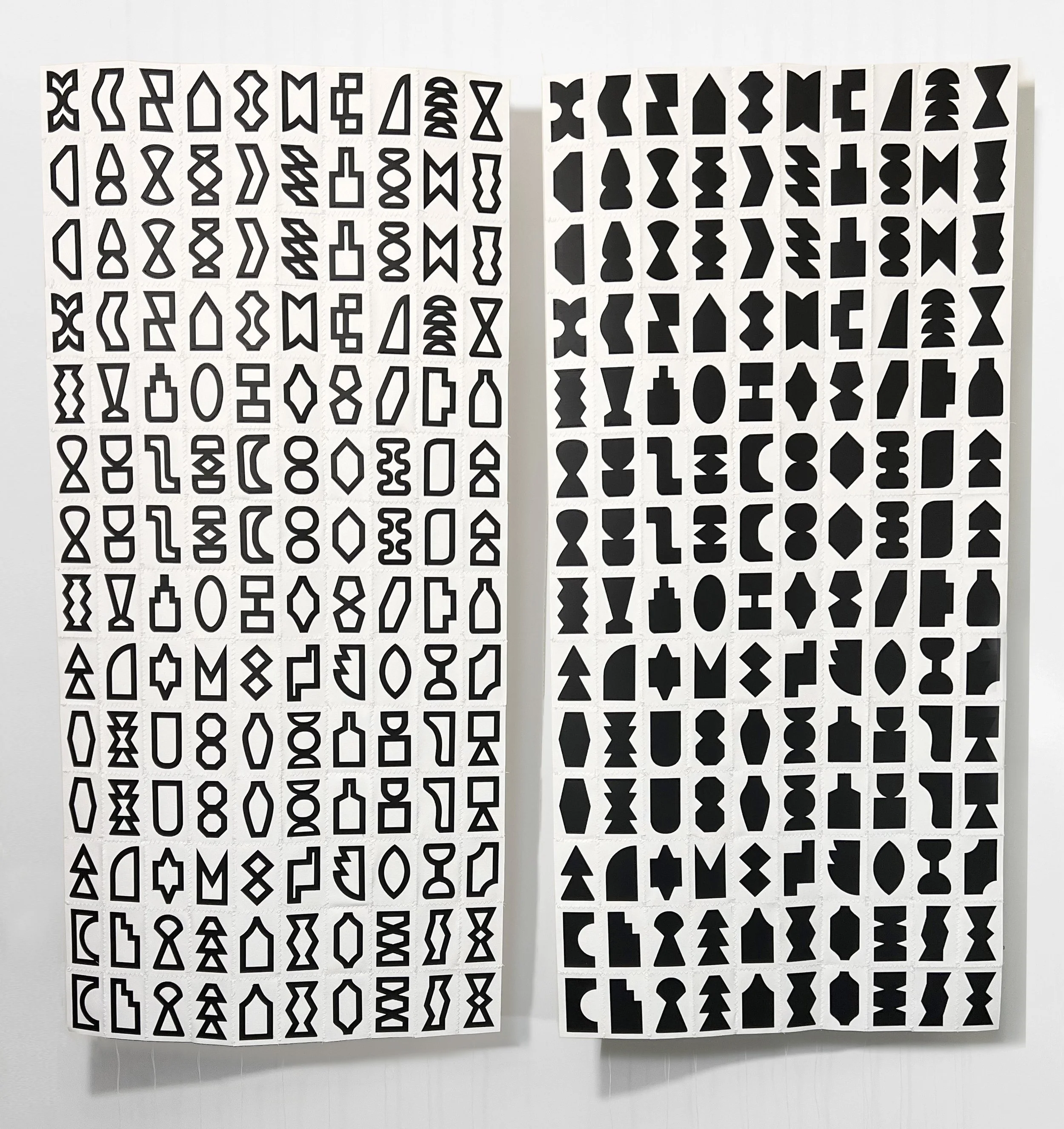
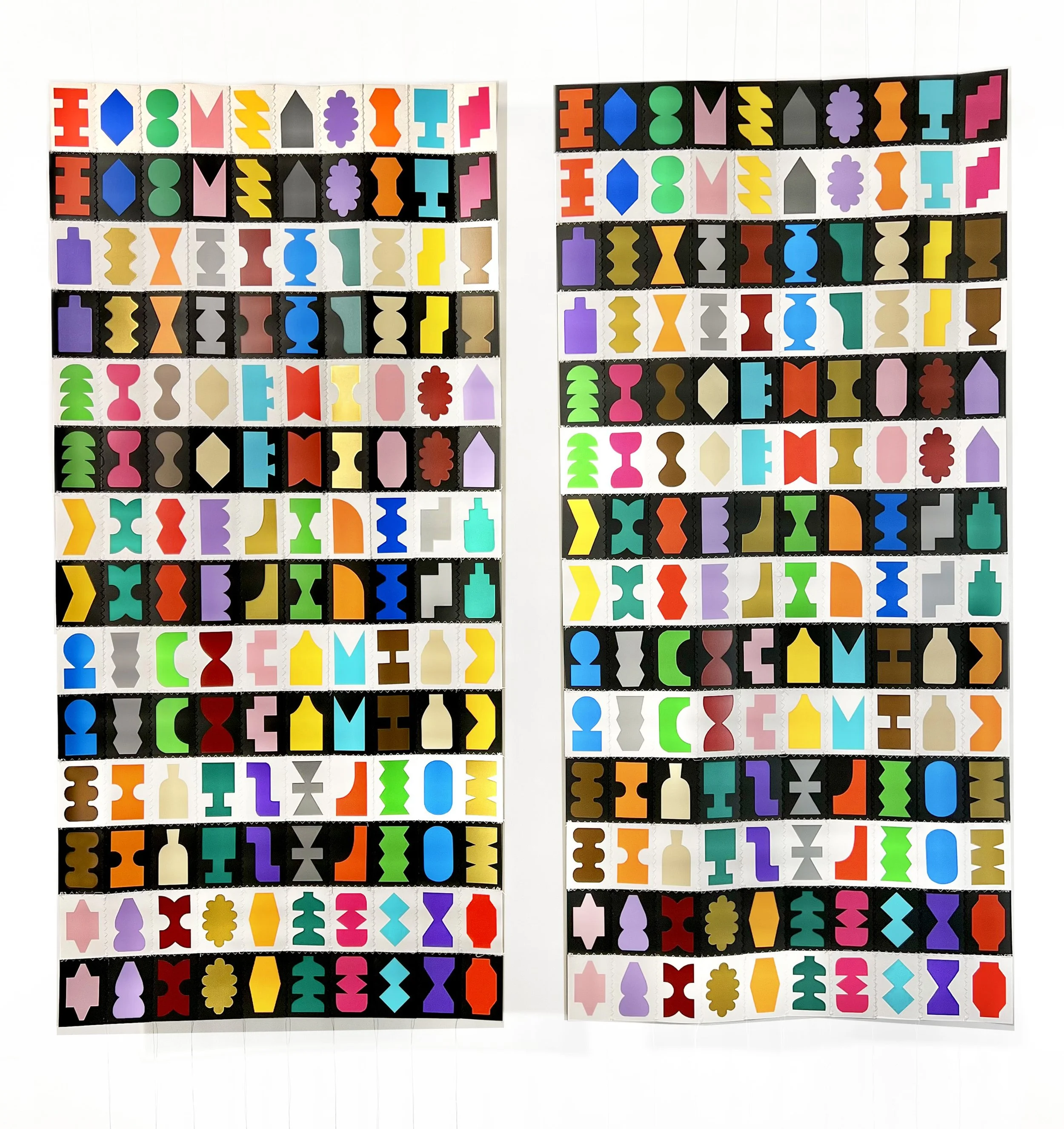
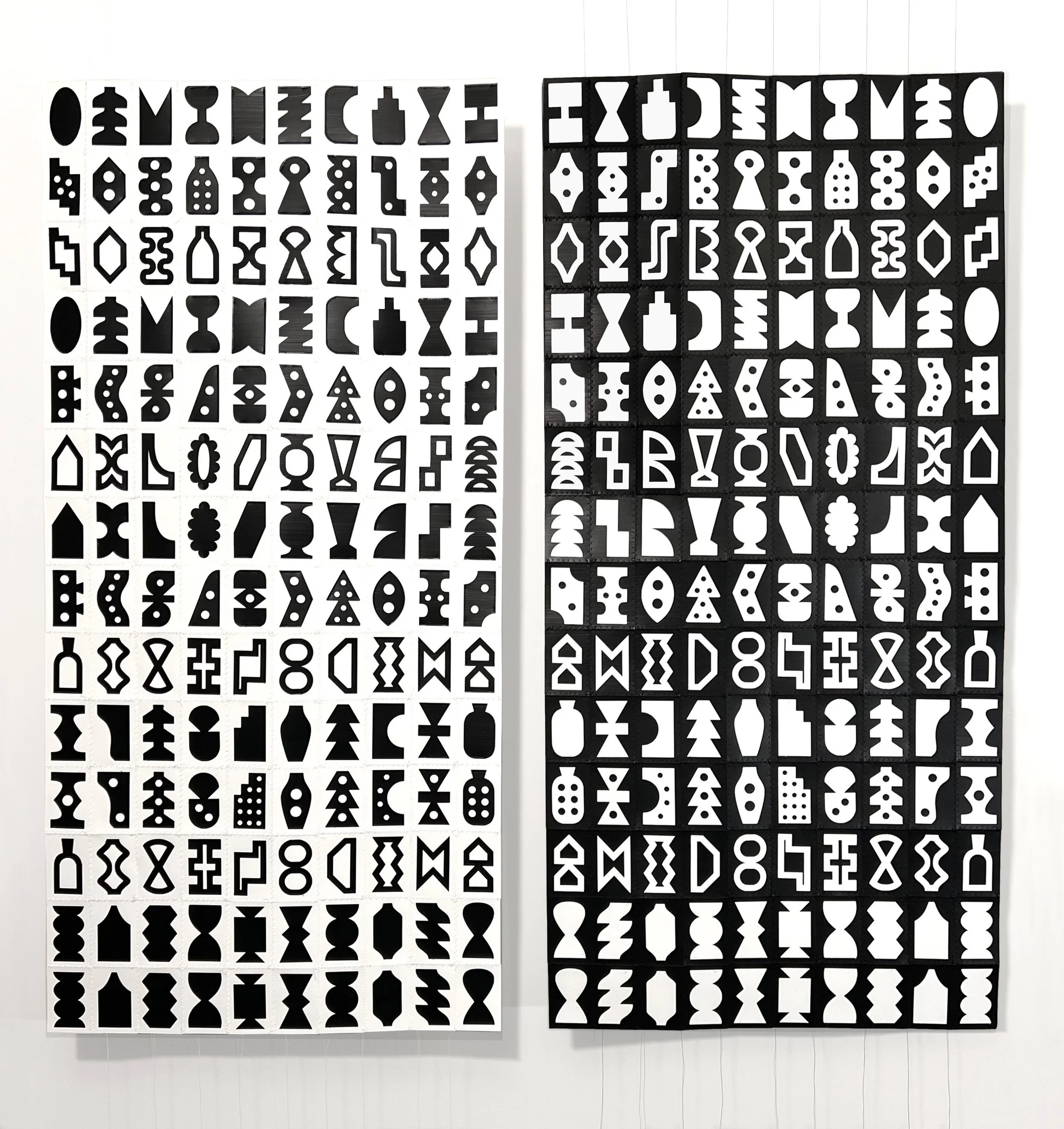
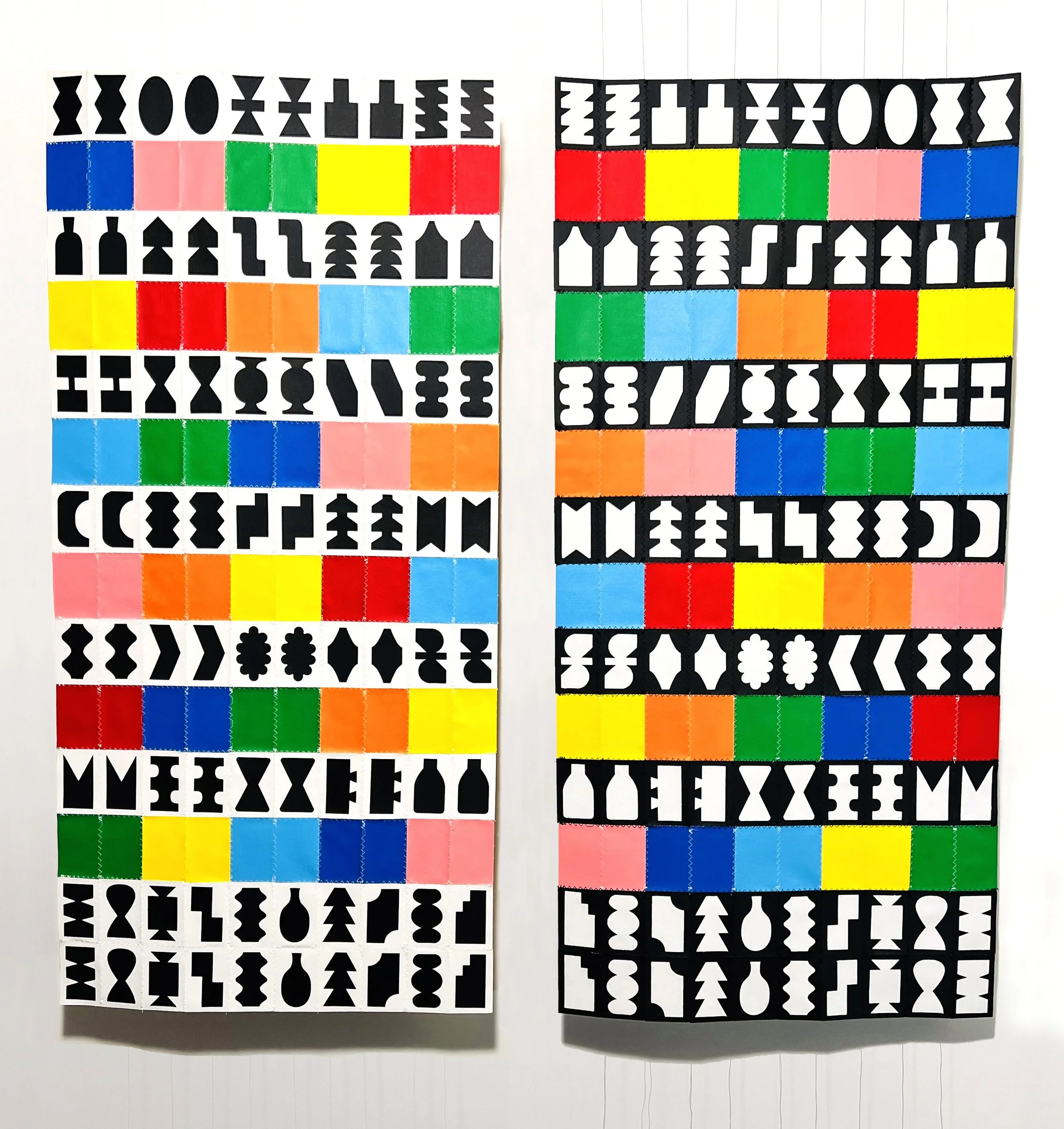
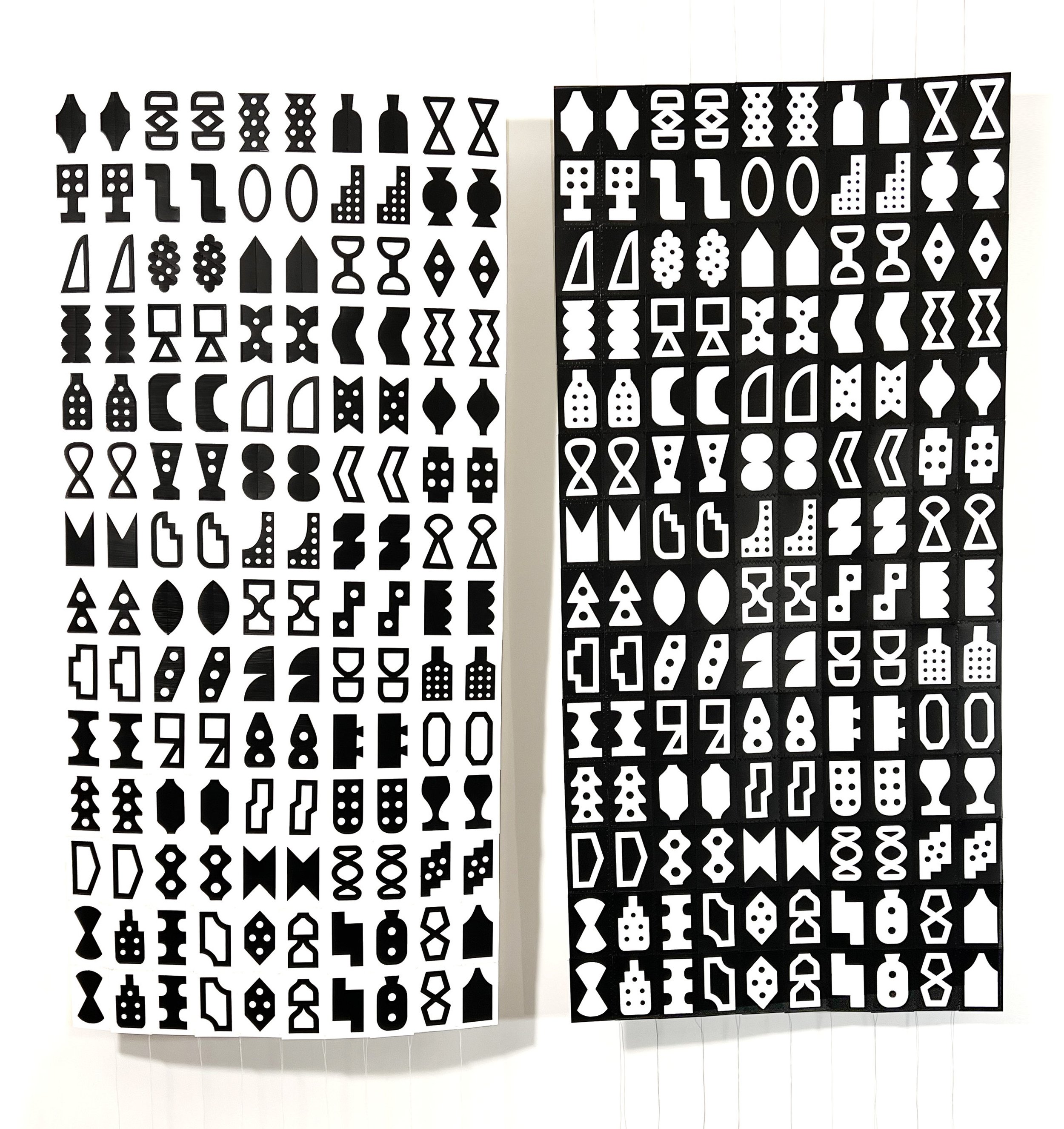
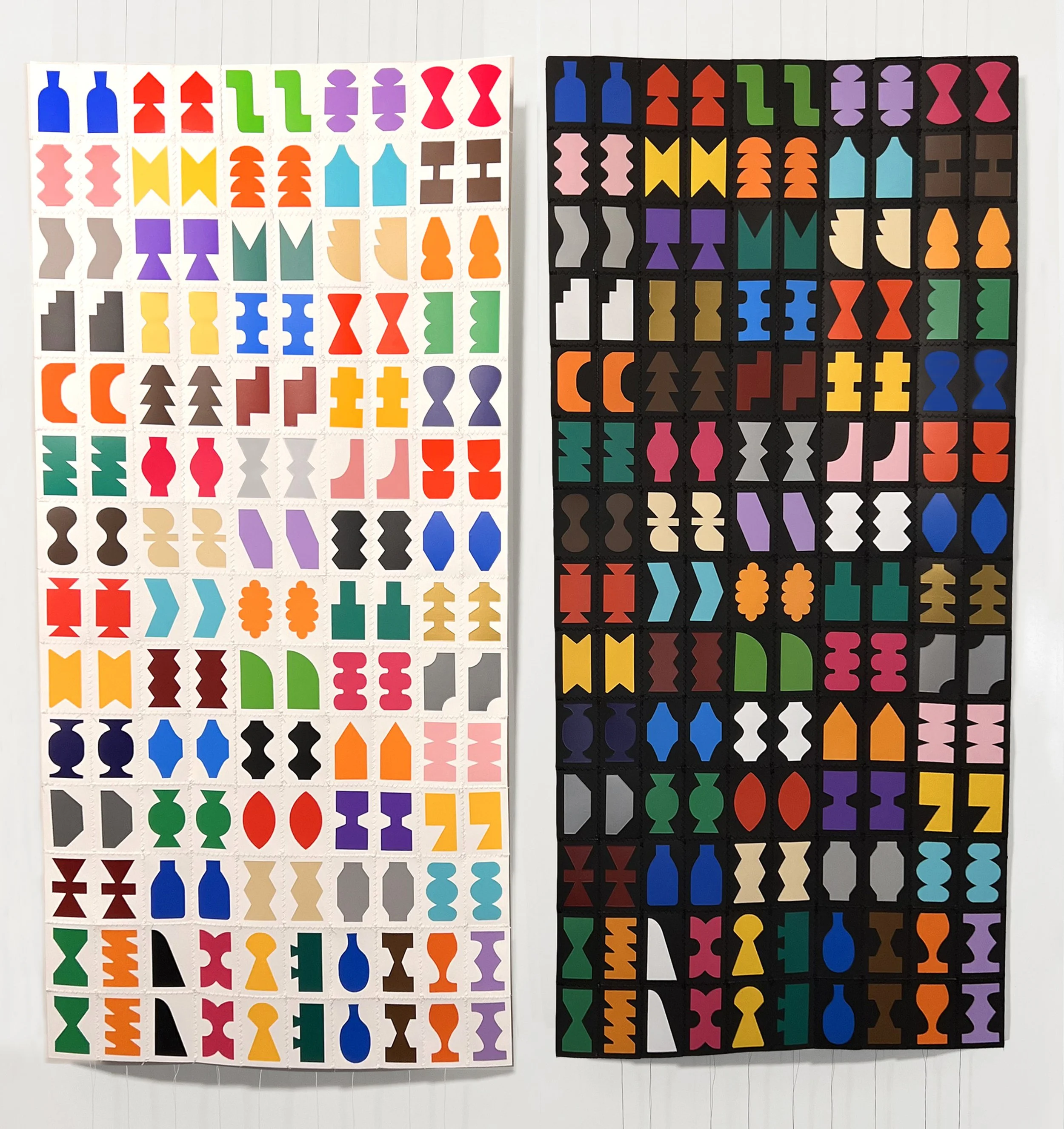
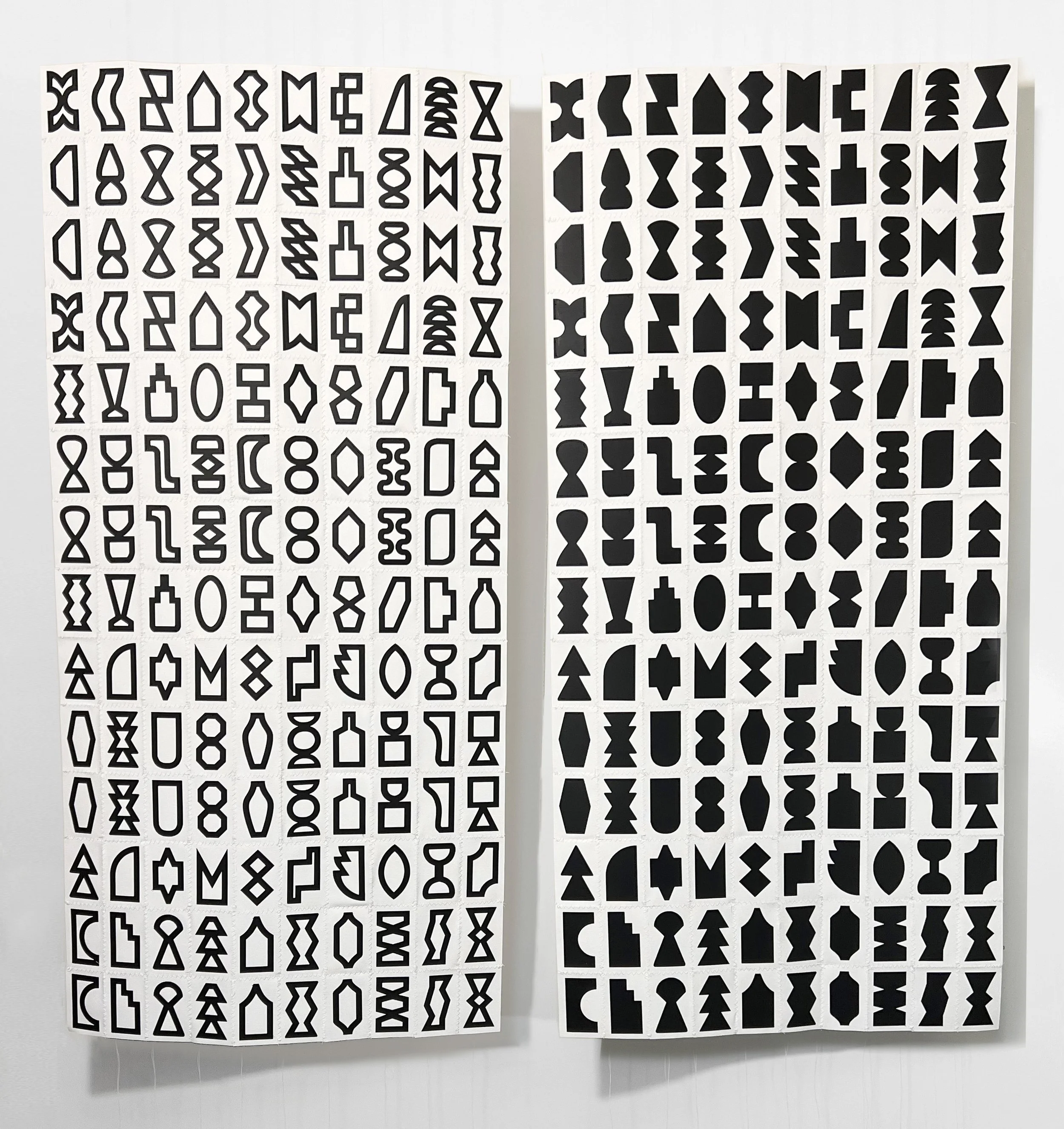
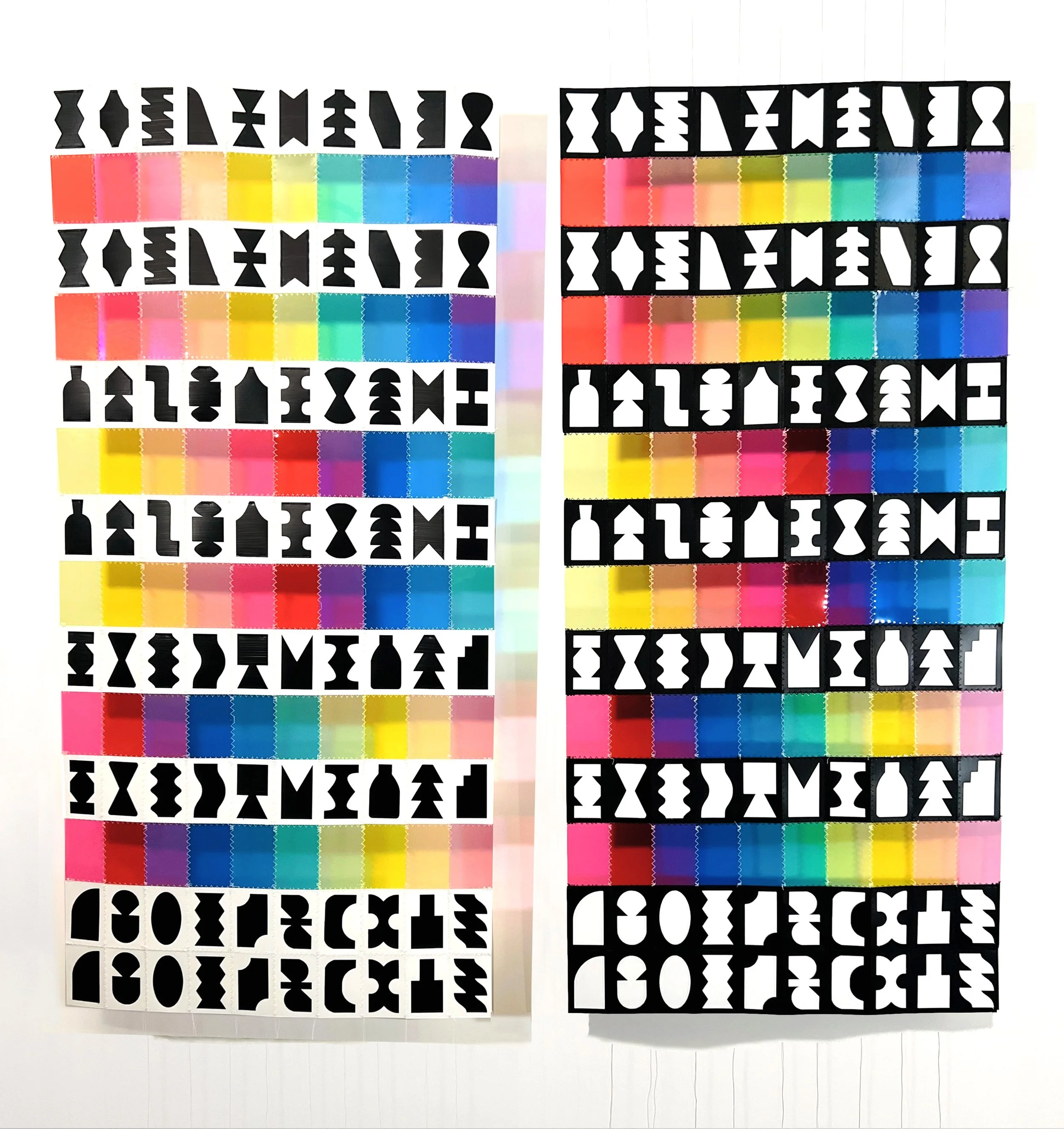
In our ongoing exploration of the nuances and complexities of twinhood, we have developed a new visual form we call the Twin Sonnet. Reimagining the traditional fourteen-line sonnet as a structured grid and merging it with the format of the diptych, the Twin Sonnet translates poetic architecture into a paired visual system. Drawing inspiration from artists such as Robert Rauschenberg (Factum I & II), Allan McCollum (The Shapes Project), Jennifer Bartlett (Rhapsody), and Ray Johnson (Moticos), we have developed a bold visual language of graphic shapes, color, and pattern to articulate the lived experience of being twins.
The power of the sonnet lies in the doubleness embedded within its structure—from alternating rhyming lines to stanzas that resolve in a final couplet. In our translation, each ten-syllable line becomes ten visual units. Across two panels, this structure generates 280 modular elements. This mathematical framework echoes our shared gestational time and reflects an origin story rooted in simultaneity and togetherness.
Each Twin Sonnet unfolds as a conversation of mirroring, divergence, and exchange. Shapes shift, forms duplicate, and patterns synchronize and repeat, drawing viewers into a visual rhythm—like a Gertrude Stein poem set in motion:
“I double you, of course you do. You double me, very likely to be…”
More than a visual or poetic experiment, the Twin Sonnet functions as a reconfigurable system for expressing the phenomenology of twinhood. Historically, the sonnet has served as a vessel for constraint, invention, and resistance. For us, it becomes a double portrait—one that embraces relational identity, reciprocity, and the rhythmic complexity of shared becoming.